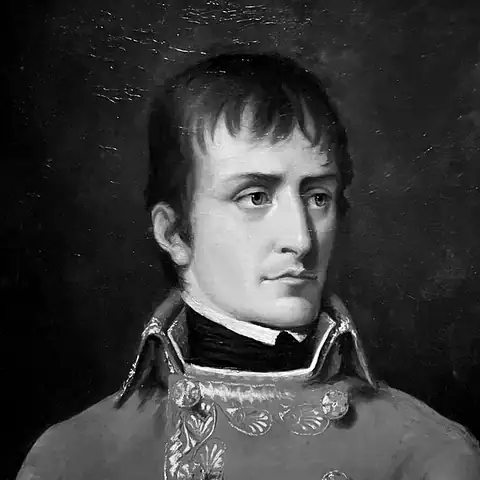
Who was Napoléon Bonaparte?
Napoleon was born in Ajaccio, Corsica, in 1769 and became a French army officer. He rose in the Revolutionary wars and in 1799 helped overthrow the Directory, becoming first consul. He was made first consul for life in 1802 and emperor in 1804. His rule brought the Napoleonic Code, the Concordat with the papacy and the Bank of France, but also wars against Britain, Prussia, Spain and Russia. After the failed invasion of Russia in 1812 he abdicated in 1814, returned in 1815, lost at Waterloo and died on St. Helena in 1821.
Political views
- In 1799 he helped overthrow the Directory and became first consul with almost unlimited powers, then first consul for life in 1802 with the right to name his successor.Source: encyclopedia.com
- He used plebiscites to legitimize his rule and his imperial ambitions, and by the end he was widely seen as a dictator who disguised tyranny in the rhetoric of the revolution.Source: ebsco.com
- The Napoleonic Code was prepared by committees under Cambacérès, with Napoleon taking an active part, and it was adopted across much of Europe.Source: newworldencyclopedia.org
- The 1801 Concordat reconciled the Catholic majority to his regime but let him nominate the clergy, who were paid by the state.Source: newworldencyclopedia.org
- After a plot was uncovered in January 1804 he ordered the arrest of the duc d'Enghien, who was tried in secret and executed in March.Source: newworldencyclopedia.org
- He decided to reconquer Saint-Domingue and restore slavery there, and in 1801 sent an army under Leclerc, but the effort ended in French defeat in 1803.Source: encyclopedia.com
- He set up the Continental System, a trade blockade of Britain, and his effort to enforce it helped lead to the invasion of Spain.Source: newworldencyclopedia.org
- His invasion of Russia in 1812 began with 500,000 men and ended with about one-fifth of that army.Source: ebsco.com
Legacy
Admirers credit Napoleon with ending disorder in France, reforming its law and administration, creating the Bank of France and spreading revolutionary legal ideas across Europe through the Code. Critics call him a dictator who compromised revolutionary ideals, sought to restore slavery in Saint-Domingue, ordered the secret trial and execution of the duc d'Enghien, and waged wars that left a historian's estimate of perhaps six million Europeans dead. They also note that his system gave later dictators a model, and that his wars cost France its status.