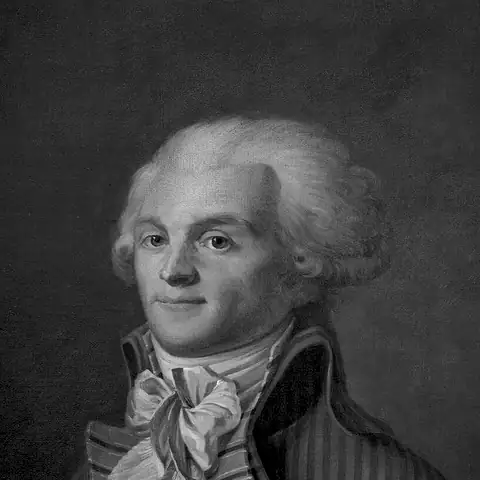
Who was Maximilien Robespierre?
Maximilien Robespierre was born on 6 May 1758 in Arras and earned a law degree in 1781. He admired Rousseau, defended the poor and was nicknamed the incorruptible. Elected to the Estates General at thirty, he became a leading Jacobin. He opposed the death penalty and slavery, but in December 1792 he argued successfully for the execution of Louis XVI. He joined the Committee of Public Safety in July 1793 and helped drive the Reign of Terror. Arrested on 27 July 1794, he was guillotined on 28 July with 21 allies.
Political views
- He admired Jean-Jacques Rousseau, became known for defending the poor, and was nicknamed the incorruptible.Source: biography.com
- He opposed the death penalty and slavery in his early career.Source: biography.com
- In December 1792 he argued successfully for the execution of Louis XVI.Source: biography.com
- In his February 1794 speech he said that during a revolution the spring of popular government is virtue combined with terror.Source: sourcebooks.fordham.edu
- He described terror as a natural consequence of the general principle of democracy applied to the country's most pressing needs.Source: sourcebooks.fordham.edu
- He introduced the Cult of the Supreme Being, a form of deism meant to replace Roman Catholicism and the Cult of Reason, and led its festival on 8 June 1794.Source: worldhistory.org
- The Law of 22 Prairial, passed on 10 June 1794, sped up trials during the Terror and led to more executions.Source: worldhistory.org
Legacy
Admirers see Robespierre as an incorruptible defender of the poor and a principled republican who would not compromise. Critics charge that he used the Terror to destroy political opponents. In about eleven months, roughly 300,000 suspects were arrested and more than 17,000 were executed, mostly by guillotine, under the Committee he dominated. When he refused to name the traitors he accused in July 1794, moderates and revolutionaries joined to bring him down. After his fall the Revolution became less radical, and Napoleon took power in 1799.