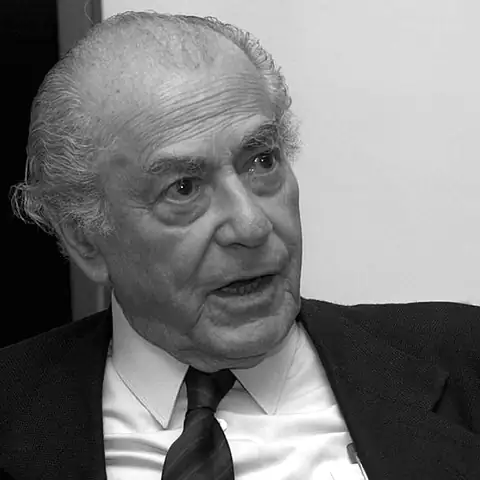
Who was Leonel Brizola?
Brizola came from a poor rural family in Rio Grande do Sul and became an engineer. In politics he joined the Brazilian Labor Party (PTB), heir to the Vargas movement, and he served as mayor of Porto Alegre and then governor of his home state. He was married to the sister of João Goulart, who became president. When Jânio Quadros quit in 1961, Brizola stood against the military chiefs who wanted to stop Goulart from taking office. The 1964 coup sent him into exile abroad, and he came home only after the 1979 amnesty. He then started the Democratic Labor Party (PDT), won the Rio de Janeiro governorship twice and stood for president in 1989 and 1994.
Political views
- In 1961 he ran a radio network called the Legality Chain to rally people against a military veto of Goulart taking office.Source: www18.fgv.br
- In 1959 and 1962 he took over the Rio Grande do Sul branches of the American firms AMFORP and ITT.Source: www18.fgv.br
- He pushed for Goulart's 'basic reforms', above all land reform, and he backed movements of landless farmers.Source: www18.fgv.br
- As governor of Rio he put up hundreds of full-day public schools, the CIEPs, designed by the architect Oscar Niemeyer.Source: www18.fgv.br
- He told the state police to end sweeping favela raids and moved against death squads tied to off-duty officers.Source: en.wikipedia.org
- He cast his politics as a struggle against foreign economic control and for national ownership of key resources.Source: www18.fgv.br
Legacy
Brizola remains a main reference point for Brazilian laborism, known as trabalhismo. Supporters remember how he defended constitutional order in 1961, how much he put into public schools and how steadily he opposed army rule. The PDT still claims his name. Right-wing and centrist critics say his calls to press Congress in 1963-1964 sharpened the divisions that led to the coup, and that his seizures of foreign firms scared off investors. His security policy in Rio is still argued over. Opponents tie it to the rise of drug gangs. Defenders, along with some scholars, say it cut police abuse in poor areas and that crime had other roots.
In their own words
“To free themselves from their despoilers, from poverty and backwardness, from the large estates and from exploitation.”