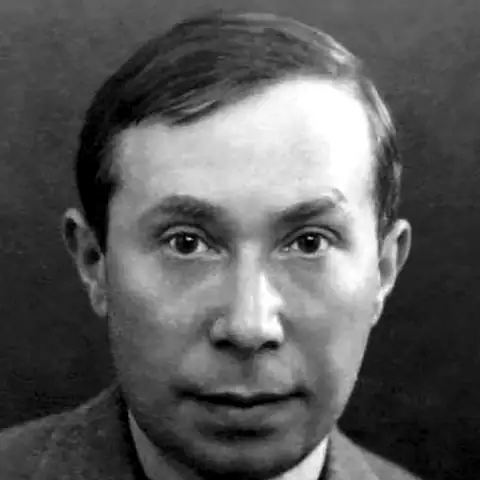
Who was Leo Strauss?
Leo Strauss was born in 1899 in Kirchhain, Germany, into an Orthodox Jewish family. Ernst Cassirer was one of his teachers, and he was drawn to Husserl and Heidegger. In 1932 a Rockefeller fellowship let him leave Germany. He lived in France and England before arriving in America in 1937, and he became a citizen in 1944. Teaching jobs followed at the New School, then Chicago from 1949, and finally Claremont and St. John's College. His best-known books include On Tyranny, Persecution and the Art of Writing, Natural Right and History, and Thoughts on Machiavelli.
Political views
- In Natural Right and History he argued that historicism and positivism lead modern thought into a relativism that cannot judge between ways of life.Source: plato.stanford.edu
- He thought ancient political philosophy deserved to be taken seriously as a rival to modern thinking, which he traced back to Machiavelli.Source: en.wikipedia.org
- In his view liberal democracy was likely the best regime that could really work. He added that people who support it should not flatter it.Source: plato.stanford.edu
- He argued that thinkers who feared persecution often put their real teaching between the lines of their books.Source: plato.stanford.edu
- For him, reason and revelation, or Athens and Jerusalem, cannot disprove each other. Their conflict is what keeps Western thought alive.Source: encyclopedia.com
- He faulted social science that claims to be free of values, saying it cannot spot tyranny the way a doctor spots disease.Source: encyclopedia.com
Legacy
Admirers say Strauss revived the serious study of ancient and medieval political thought and taught a strict habit of reading old books slowly and closely. His students, and their students, formed a strong school within American political science. Critics call him an elitist who taught that a wise few may mislead the many, or who hid his own meaning. His defenders reject those readings. In the 2000s some commentators called him an intellectual source of neoconservatism, and even of the Iraq War, since a number of officials had studied with his students. Many careful scholars, including the writers of the Stanford Encyclopedia entry, find the link thin because his work did not deal with policy.
In their own words
“A social science that cannot speak of tyranny with the same confidence with which medicine speaks of cancer cannot understand social phenomena for what they are.”