12axes-testTake the test
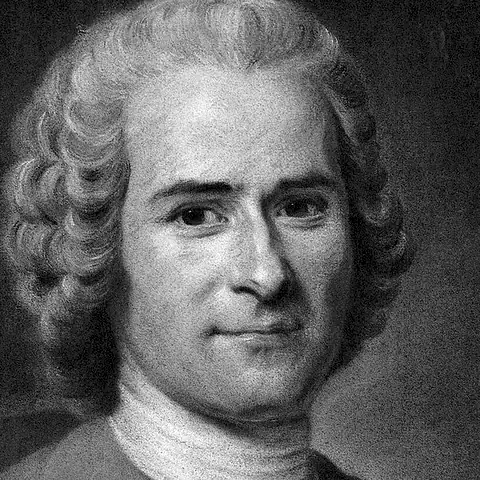
Jean-Jacques Rousseau
Historical figureFrance1712-1778

Jean-Jacques Rousseau

Political philosopher · Author of The Social Contract

Philosopher from Geneva whose 1762 Social Contract holds that a government is legitimate only when it expresses the general will of the people it rules.

Profile on 12 axesAll 12 documented
ECONOMYSTATESOCIETYWORLDOwnershipMarketsWelfareAuthoritySecurityStructureMoralityReligionTechnologyCultureTradeForeign
Where they stood

Jean-Jacques Rousseau, axis by axis

  1. PublicPrivate
  2. PlannedFree
  3. SharedSelf-reliant
  4. DemocraticStrong leader

    He put sovereignty in the hands of the people, yet the general will, the Legislator and the line about being forced to be free lead some critics to see a risk of tyranny.

  5. LibertyOrder

    His civil religion lets the state exile anyone who rejects its articles of civic faith. That nudges the axis toward order, even though freedom was his theme.

  6. LocalCentral
  7. ProgressiveTraditional

    He attacked inherited ranks but kept conventional ideas about the roles of men and women in Emile, and he opposed a theatre in Geneva on moral grounds.

  8. SecularReligious
  9. EmbraceCaution

    The score comes from his early essay doubting that arts and sciences improve morals. He said nothing about modern technology.

  10. MulticulturalNational identity

    In his advice for Poland he urged building up national customs and patriotism.

  11. GlobalProtected
  12. CooperationStrength

Who was Jean-Jacques Rousseau?

Jean-Jacques Rousseau was a citizen of Geneva who spent most of his adult life in France. For a time he moved in the circle of the Encyclopedists, then fell out with many of them. His first big essays, from 1750 and 1755, said that civilisation had spoiled people's natural goodness and bred unfair inequality. In 1762 he published two books, The Social Contract and Emile, and the Paris authorities condemned both. One described how free people could rule themselves, and the other how to raise a child. His later works included advice to the Poles on their government and the Confessions, and he also took up the study of plants.

Political views

  • Said that rightful power comes only from a contract in which citizens join to form a sovereign people, guided by the general will.Source: plato.stanford.edu
  • Held that the people's sovereignty cannot be handed to representatives, so laws should be passed by the citizens when they assemble.Source: plato.stanford.edu
  • Blamed private property for the rise of inequality, though he later accepted ownership when it was protected by law.Source: iep.utm.edu
  • Wrote that no citizen should be wealthy enough to buy another, and none so poor as to be forced to sell himself.Source: gutenberg.org
  • Called for a civil religion with a few simple beliefs, and said people who rejected it could be exiled as a danger to the community.Source: gutenberg.org
  • Doubted that progress in the arts and sciences had made people more virtuous, and concluded it had not.Source: iep.utm.edu
  • Gave a founding Legislator the job of drafting a people's basic laws, an idea linked to his concern for civic virtue.Source: plato.stanford.edu

Legacy

The French revolutionaries made Rousseau a hero, and his thinking on popular rule and equality fed democratic, republican and socialist movements. Romantic writers and school reformers borrowed from Emile and his novels. Admirers see a champion of self-government against rank and privilege. Liberal critics say that the general will can be used to force dissenters into line. Mary Wollstonecraft and later feminists objected that his picture of freedom left women out.

In their own words

“Man is born free; and everywhere he is in chains.”
The Social Contract, Book I, Chapter 1, 1762 (G. D. H. Cole translation)

How close are you to Jean-Jacques Rousseau?

Take the 12 Axes test and see which historical figure is your political twin, axis by axis.

Take the test

Jean-Jacques Rousseau: questions

What is the general will?

It is Rousseau's name for what a community wants as a whole when its members think about the common good, not their private gain. He said laws should express it.

Was Rousseau on the left or the right?

Both camps claim him. His stress on equality and popular rule inspired the left, while his praise of tradition, civic duty and national customs appeals to some on the right.

Where does Rousseau sit on the 12 axes?

He leans toward shared economic provision, local power and democracy. He scores toward tradition, caution about technology, national identity and protected trade.

Sources