12axes-testTake the test
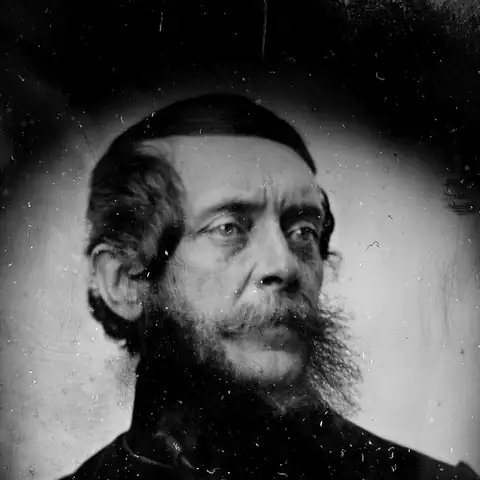
Lajos Kossuth
Historical figureHungary1802-1894

Lajos Kossuth

Governor-President of Hungary (1849) · Finance minister in the 1848 government

Hungarian lawyer, journalist and statesman who led the 1848-1849 revolution against Habsburg rule as governor-president and spent the rest of his life in exile campaigning for full independence.

Profile on 12 axes8 of 12 documented
ECONOMYSTATESOCIETYWORLDOwnershipMarketsWelfareAuthoritySecurityStructureMoralityReligionTechnologyCultureTradeForeign
Where they stood

Lajos Kossuth, axis by axis

  1. PublicPrivate

    He backed ending serfdom through compensated redemption and abolishing entail, which expands private property.

  2. PlannedFree

    He was a liberal on legal equality but backed protectionist trade associations and state-issued money in 1848.

  3. 03WelfareNo clear record
    SharedSelf-reliant
  4. DemocraticStrong leader

    He pressed for a common tax burden, constitutional rights and a parliament, though he also held the near-dictatorial title of governor-president in 1849.

  5. LibertyOrder

    He was jailed in 1837 for his newspapers, and he stood for press freedom and constitutional rights.

  6. 06StructureNo clear record
    LocalCentral
  7. 07MoralityNo clear record
    ProgressiveTraditional
  8. 08ReligionNo clear record
    SecularReligious
  9. EmbraceCaution

    He promoted factories, industrial exhibitions and Hungarian industry, which points to embracing technology.

  10. MulticulturalNational identity
  11. GlobalProtected

    He was director of the Protective Association founded in 1844, whose members pledged to buy only Hungarian goods.

  12. CooperationStrength

    He sought independence from Habsburg rule and help from abroad, and he promoted a Danubian Confederation in exile.

4 axes have no clear record, so matching leaves them out.

Who was Lajos Kossuth?

Lajos Kossuth was born in 1802 and made his name as a campaigning journalist. He launched a parliamentary news sheet in 1832, and in 1837 police arrested him on orders from the Vienna court, leading to a three-year sentence. From 1841 he edited Pesti Hírlap, which grew rapidly, and he pressed for reform. In 1848 he served as finance minister in the revolutionary government. After the 1849 declaration of independence deposed the Habsburgs, the Debrecen assembly made him governor-president. Habsburg and Russian armies crushed the revolution, and he lived in exile, largely in Turin, until his death in 1894.

Political views

  • His writings called for a common tax burden regardless of rank, the abolition of entail and the end of serfdom through compensated redemption.Source: ado.hu
  • Vienna took action against his early parliamentary reports, and he was arrested in May 1837 and sentenced to three years in prison.Source: mult-kor.hu
  • As editor of Pesti Hírlap from 1841 he analyzed social and economic problems, and circulation rose from about 60 to 5,200.Source: ado.hu
  • He backed Hungarian industry, organized the first industrial exhibition in 1842 and directed the Protective Association of 1844, whose members pledged to buy only Hungarian goods.Source: ado.hu
  • In 1848 he oversaw the April Laws as finance minister and ordered the first Hungarian banknotes to fund national defense.Source: ado.hu
  • The 1849 Declaration of Independence deposed the Habsburgs, and the Debrecen National Assembly named him governor-president.Source: ado.hu
  • He envisioned a federation within the Kingdom of Hungary in which all nationalities took part in a democratic system based on equality and parliamentary representation. In exile he promoted a Danubian Confederation.Source: americanhungarianfederation.org
  • He opposed the 1867 Compromise with Austria and demanded full independence until his death.Source: americanhungarianfederation.org

Legacy

Admirers honor Kossuth as the great symbol of Hungarian freedom, a reformer who argued for equality, democracy and an end to serfdom, and who became a celebrity in the United States, where he addressed Congress in 1852. Critics note that the revolution he led was defeated by combined Habsburg and Russian armies, and some historians say his Danubian Confederation had little realistic basis. His 1867 attack on the Compromise left him outside the settlement most Hungarians accepted. Historians still debate the war's treatment of national minorities.

How close are you to Lajos Kossuth?

Take the 12 Axes test and see which historical figure is your political twin, axis by axis.

Take the test

Lajos Kossuth: questions

Why is Lajos Kossuth famous?

He led the Hungarian revolution of 1848-1849 against Habsburg rule, served as governor-president and then spent the rest of his life in exile pushing for full independence.

Did Lajos Kossuth visit the United States?

Yes. He toured in 1851-1852 and was only the second foreign leader after Lafayette to address a joint session of Congress, though the US gave him no direct help.

What did Kossuth believe about other nationalities?

He imagined a federation where all nationalities shared in a democratic system with equal rights. How his government actually treated minorities is still debated.

Sources