12axes-testTake the test
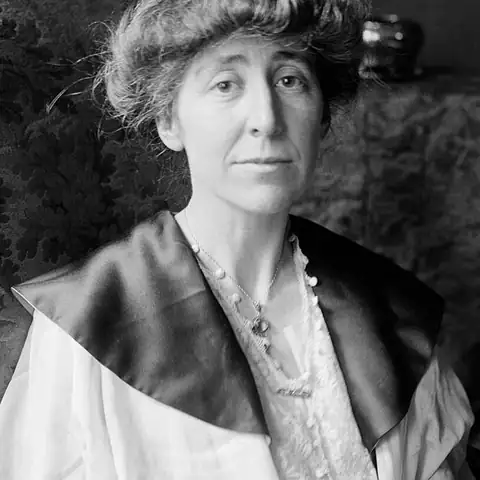
Jeannette Rankin
Historical figureUnited States1880-1973

Jeannette Rankin

U.S. Representative from Montana (1917-1919 and 1941-1943) · First woman elected to the U.S. Congress

First woman in Congress, a suffragist and pacifist who voted against the First World War and was the only member to vote against entering the Second.

Profile on 12 axes6 of 12 documented
ECONOMYSTATESOCIETYWORLDOwnershipMarketsWelfareAuthoritySecurityStructureMoralityReligionTechnologyCultureTradeForeign
Where they stood

Jeannette Rankin, axis by axis

  1. PublicPrivate

    After a 1917 mine fire she proposed letting the President take over metal mines and criticized Anaconda Copper's dominance.

  2. PlannedFree

    She backed labor protections and workplace limits, such as the eight-hour day. She also criticized corporate power.

  3. SharedSelf-reliant
  4. DemocraticStrong leader

    She backed election reform and women's suffrage and wanted a popular vote on war, so she is toward democratic control.

  5. 05SecurityNo clear record
    LibertyOrder
  6. 06StructureNo clear record
    LocalCentral
  7. ProgressiveTraditional

    She fought for women's votes and rights, which is progressive, but she also backed Prohibition. Close to the middle, leaning progressive.

  8. 08ReligionNo clear record
    SecularReligious
  9. 09TechnologyNo clear record
    EmbraceCaution
  10. 10CultureNo clear record
    MulticulturalNational identity
  11. 11TradeNo clear record
    GlobalProtected
  12. CooperationStrength

    A lifelong pacifist who voted against both world wars and favored defensive limits on troops. She is less about alliances than about refusing war.

6 axes have no clear record, so matching leaves them out.

Who was Jeannette Rankin?

Jeannette Rankin was born near Missoula, Montana, in 1880. She campaigned for women's suffrage in several states and in 1916 won a House seat as a Republican, becoming the first woman in Congress. Days after taking office in April 1917 she voted against the declaration of war on Germany, and she lost her seat in 1918. She spent years in peace work, returned to the House in 1940 and, on 8 December 1941, cast the only vote against war with Japan. She did not seek re-election in 1942. In 1968 she led the Jeannette Rankin Brigade protesting the Vietnam War, and she died in 1973.

Political views

  • Opened the House debate on the women's suffrage amendment in 1918 as ranking member of the Woman Suffrage Committee, and introduced the first suffrage amendment as her first bill in 1917.Source: history.house.gov
  • Was among those voting against entry into the First World War on 6 April 1917, saying she could not vote for war.Source: history.house.gov
  • Backed child welfare, protective labor laws, election reform and the Sheppard-Towner bill on infant and maternal health.Source: history.house.gov
  • After the 1917 Butte mine fire she proposed that the President take over metal mines, and she criticized Anaconda Copper's grip on Montana.Source: history.house.gov
  • Opposed Lend-Lease and the prewar draft in 1941, and proposed a popular vote on war and congressional approval before troops go abroad.Source: encyclopedia.com
  • On 8 December 1941 cast the only vote in Congress against declaring war on Japan, saying she could not go to war as a woman and would not send others.Source: nps.gov
  • Visited India seven times between 1949 and 1971 to study Gandhian nonviolence and led a march of about 5,000 against the Vietnam War in 1968.Source: encyclopedia.com

Legacy

Admirers honor Rankin as a pioneer for women and as a pacifist who kept her convictions at the cost of her career. Critics said her war votes were unpatriotic, and her 1917 vote cost her renomination in 1918. Critics also labeled her a communist, a charge she denied. Her 1941 vote against war with Japan stood alone, and the vote ended her chance of re-election.

How close are you to Jeannette Rankin?

Take the 12 Axes test and see which historical figure is your political twin, axis by axis.

Take the test

Jeannette Rankin: questions

Why did Jeannette Rankin vote against both world wars?

She was a committed pacifist who believed war was not a good way to resolve conflicts. She said she could not vote for war in 1917, and in 1941 that she could not go to war as a woman and would not send anyone else.

Was Jeannette Rankin the first woman in Congress?

Yes. She was elected from Montana in 1916 and served in the House in 1917-1919, then again in 1941-1943.

Was Jeannette Rankin a communist?

No. Critics used that label against her peace work and she denied it. She was a Republican who ran on a Progressive platform in 1916.

Sources