12axes-testTake the test
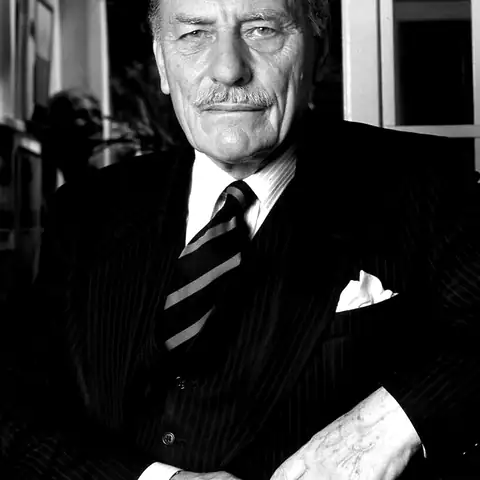
Enoch Powell
Historical figureUnited Kingdom1912-1998

Enoch Powell

Minister of Health (1960-1963) · Financial Secretary to the Treasury (1957-1958)

Classical scholar and Conservative MP, later an Ulster Unionist, who backed free markets, fought European integration, and gave the 1968 speech against immigration known as "Rivers of Blood".

Profile on 12 axes11 of 12 documented
ECONOMYSTATESOCIETYWORLDOwnershipMarketsWelfareAuthoritySecurityStructureMoralityReligionTechnologyCultureTradeForeign
Where they stood

Enoch Powell, axis by axis

  1. PublicPrivate
  2. PlannedFree
  3. SharedSelf-reliant
  4. DemocraticStrong leader

    He argued that the Commons must control the executive and that Parliament's sovereignty is the root of democracy, so he leans toward democratic checks.

  5. LibertyOrder

    He opposed capital punishment and warned in 1974 against rushing through anti-terror laws, yet held conservative views on order. The result is close to the middle.

  6. LocalCentral
  7. ProgressiveTraditional
  8. SecularReligious
  9. 09TechnologyNo clear record
    EmbraceCaution
  10. MulticulturalNational identity

    He is best remembered for calling for deep cuts to Commonwealth immigration, above all in the 1968 Birmingham speech, so he scores strongly toward national identity.

  11. GlobalProtected

    As a free-market economist he opposed the European Community for reasons of sovereignty, not protectionism, so the score leans toward free trade.

  12. CooperationStrength

    He put national independence first and distrusted supranational bodies. But he also wanted troops pulled out from east of Suez and later criticised the nuclear deterrent, so the score leans only mildly toward unilateral.

One axis has no clear record, so matching leaves it out.

Who was Enoch Powell?

Enoch Powell was born in Birmingham in 1912 to two schoolteachers. A gifted classicist, he was made professor of Greek in Sydney while still in his twenties, and he served in the army through the Second World War, ending as a brigadier. He entered Parliament as a Conservative for Wolverhampton South West in 1950. He quit as a Treasury minister in 1958 over government spending, and from 1960 he was Minister of Health. His speech in Birmingham in April 1968, urging deep cuts in immigration and predicting violence, split the country and got him sacked from the Shadow Cabinet. He left the Conservatives in 1974 over Europe and later sat for South Down as an Ulster Unionist until 1987.

Political views

  • Urged sharp limits on Commonwealth immigration and warned that, in his view, it would bring conflict and bloodshed.Source: ebsco.com
  • Wanted tight control of the money supply and a market economy, and he proposed selling off the Post Office and the telephone network.Source: en.wikipedia.org
  • Said in 1972 that joining the European Community would take away Parliament's right to make the final law.Source: api.parliament.uk
  • Quit the Conservative Party in 1974 because Britain had entered the European Economic Community.Source: ebsco.com
  • Rejected the 1985 Anglo-Irish Agreement, giving up his seat in protest and then winning it back at the by-election.Source: ebsco.com
  • Put his name to a 1965 bill to reform the law on homosexuality and was against the death penalty.Source: en.wikipedia.org

Legacy

Admirers see Powell as one of the best parliamentary speakers of his day. They praise his steady defence of national sovereignty and say he anticipated the monetarist, free-market ideas that Margaret Thatcher later made policy. Critics, including much of the press at the time, called his 1968 speech racist and inflammatory. Powell rejected the charge, but the speech cost him any chance of top office, and he never held a senior post again. Opinion polls then suggested that many voters shared his worries about immigration, which is part of why he remains such a divisive name. His record is mixed on the axes: very strong on national culture and free markets, yet democratic on authority.

In their own words

“It shows first that it is an inherent consequence of accession to the Treaty of Rome that this House and Parliament will lose their legislative supremacy.”
Speech on the second reading of the European Communities Bill, House of Commons, 17 February 1972

How close are you to Enoch Powell?

Take the 12 Axes test and see which historical figure is your political twin, axis by axis.

Take the test

Enoch Powell: questions

What did Enoch Powell say in his Rivers of Blood speech?

He spoke in Birmingham on 20 April 1968. He said immigration should be cut hard and predicted violence if it went on. Many called it racist, and Edward Heath removed him from the Shadow Cabinet.

Was Enoch Powell a Conservative?

He was a Conservative MP from 1950 until he left the party in February 1974 over Europe. He later sat as an Ulster Unionist for South Down.

Was Enoch Powell a free-market thinker?

Yes. He argued for sound money and market competition, and for selling state-owned industries. Supporters say these ideas later shaped Thatcherism.

Sources

Portrait: Enoch Powell 6 Allan Warren.jpg by Allan Warren, CC BY-SA 3.0, via Wikimedia Commons. Cropped and converted to grayscale by 12axes-test.com.