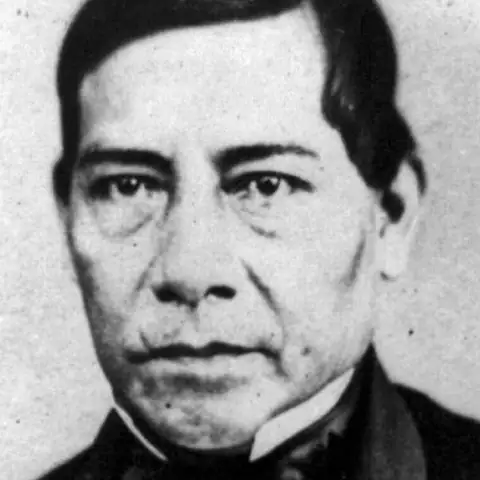
Who was Benito Juárez?
Juárez was born in 1806 in a Zapotec village in Oaxaca and was orphaned young. He trained as a lawyer, became governor of Oaxaca, and served as justice minister in 1855 after Santa Anna fell. When conservatives ousted the liberal government in 1858, he became its legal head and led it from Veracruz through the War of the Reform. He then resisted the French intervention and Emperor Maximilian, who was executed in 1867. Juárez won the presidency again in 1867 and 1871, and he was still in office when he died in July 1872.
Political views
- In 1855, as justice minister, he backed the Ley Juárez, which ended separate courts for the military and the clergy.Source: encyclopedia.com
- The Constitution of 1857 guaranteed free speech, a free press and the right of assembly, and it abolished special legal privileges.Source: encyclopedia.com
- In 1859 the liberal government confiscated Church property, except buildings, without compensation.Source: encyclopedia.com
- Reformers hoped to create small landholders, but land was mostly sold to wealthy speculators and foreigners, and Indigenous communal lands were also lost.Source: encyclopedia.com
- He suspended foreign debt payments in 1862, which gave Britain, Spain and France a pretext to intervene, and he led the resistance after France installed Maximilian.Source: encyclopedia.com
- He refused to commute Maximilian's death sentence in June 1867, treating it as a warning to foreign invaders.Source: encyclopedia.com
- He sought extraordinary powers from congress, ran for a fourth term in 1871 and put down Porfirio Díaz's revolt, which critics called arbitrary.Source: ebsco.com
- One account describes him as committed to democratic republicanism, public education and reducing the power of the Church, the caudillos and the army.Source: ebsco.com
Legacy
Mexicans widely honor Juárez as a defender of national sovereignty, equality before the law and the secular state, and a president of Indigenous origin. Admirers credit him with holding the republic together against a foreign-backed empire. Critics note that land reform enriched speculators and weakened Indigenous villages, that he dismissed about two-thirds of the liberal army without pensions, and that his insistence on reelection and wartime powers fed charges of dictatorship. Porfirio Díaz later ruled as a dictator from 1876 to 1911 while keeping Juárez's modernizing framework.