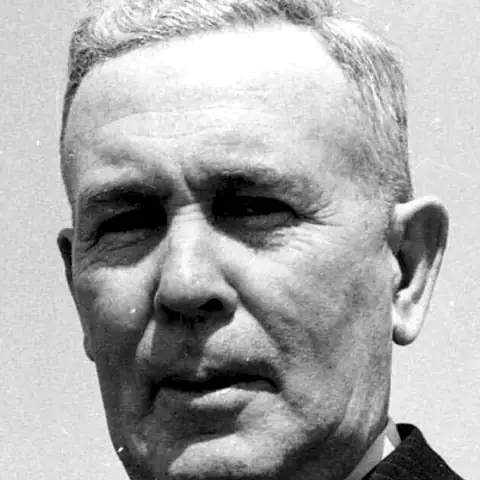
Who was Ben Chifley?
Ben Chifley grew up in Bathurst, New South Wales, and worked as a train driver before becoming a union man. He was sacked after the 1917 rail strike and later got his job back. He first won a federal seat in 1928, lost it in the 1931 landslide and returned in 1940. John Curtin made him treasurer, and when Curtin died in 1945 Chifley became prime minister. He won the 1946 election but lost power to Robert Menzies in 1949. He was still leading the Labor opposition when he died in 1951.
Political views
- Promised that the unemployment queues of the Depression would not return, and made full employment the centre of his economic plans.Source: moadoph.gov.au
- Lifted pensions and widened health and social services during and just after the war.Source: moadoph.gov.au
- Moved in 1947 to take the private banks into public hands, an idea he had backed earlier in a royal commission report.Source: en.wikipedia.org
- Spoke of Labor's mission to help those in need as a 'light on the hill'.Source: moadoph.gov.au
- Aimed for population growth of 70,000 people a year, with newcomers from Britain and other parts of Europe.Source: moadoph.gov.au
- Strongly backed the United Nations and thought Australia's defence depended on working with Britain and the United States.Source: moadoph.gov.au
- Presented Labor as a defence against communism, and sent in troops to end the 1949 coal strike.Source: en.wikipedia.org
Legacy
Chifley is often listed among Australia's best prime ministers, and Labor members still quote his light on the hill speech. Supporters credit him with keeping jobs plentiful after the war and with lasting projects such as the Snowy Mountains Scheme, the Australian National University and the pharmaceutical benefits scheme. Critics say that his bank takeover and wartime controls, such as petrol rationing, were heavy-handed and lost him middle-class votes. Some on the left fault him for using soldiers against striking miners in 1949 and for freezing union funds. He is also criticised for remarks about southern Europeans during his 1928 campaign.
In their own words
“It is, as I have said before, the beacon, the light on the hill, to which our eyes are always turned and to which our efforts are always directed.”