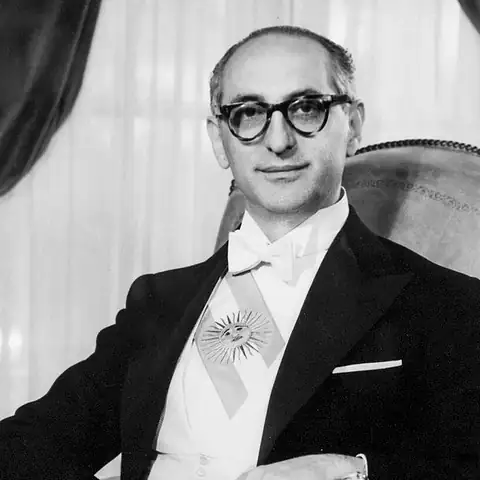
Who was Arturo Frondizi?
Frondizi was born in 1908 in Paso de los Libres and trained as a lawyer. He joined the Radical Civic Union in 1928, served as a deputy from 1946, and led the Intransigent wing after the party split in 1956. He won the 1958 presidential election with Peronist support. His government pursued developmentalism, heavy industry and foreign investment, while strikes, union opposition and military pressure grew. After Peronist wins in the 1962 elections, the military removed him in March 1962 and confined him on Martin Garcia island. He died in 1995.
Political views
- In 1955 he wrote Petroleo y politica, a critique of foreign oil activity in Argentina.Source: biografiasyvidas.com
- In mid-1958 he announced that foreign companies would extract oil under the direction of the state oil firm YPF, which contradicted his earlier positions.Source: biografiasyvidas.com
- His government shifted toward developmentalism, relying less on the state and more on heavy industry built with multinational companies, an approach inspired by Rogelio Frigerio.Source: artsandculture.google.com
- Steel, meat and oil output rose, and the first blast furnace at San Nicolas opened in 1961.Source: biografiasyvidas.com
- Labor, oil and education policies caused large strikes and demonstrations by workers and students.Source: artsandculture.google.com
- Rising living costs, union opposition and strikes led to the Conintes Plan, which dealt with internal unrest.Source: biografiasyvidas.com
- Peronists won four provinces in the 1962 legislative elections, and the decision to intervene in them preceded the military coup that removed him.Source: biografiasyvidas.com
- He later led the Movimiento Intransigencia y Desarrollo until 1985, and his views moved from progressive to conservative.Source: biografiasyvidas.com
Legacy
Supporters credit Frondizi with pushing Argentina toward industrial growth, higher steel and oil output and plans for major projects such as the Chocon dam. Critics say his oil contracts reversed what he had argued before taking office, that austerity and the Conintes Plan strained relations with unions, and that he lost control of the armed forces. The coup of 1962 cut his term short. Debate about developmentalism, foreign capital and his shift from progressive to conservative views continues.