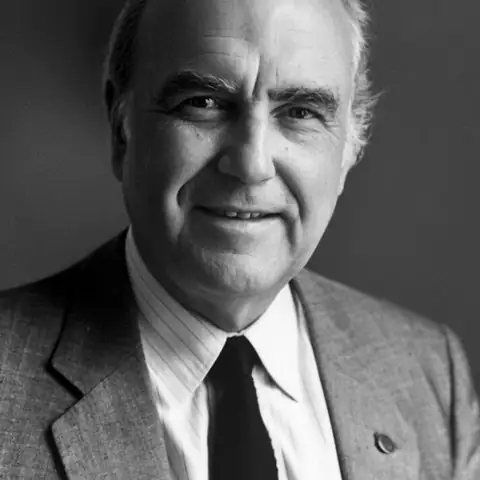
Who was Andreas Papandreou?
Andreas Papandreou, born on Chios in 1919, earned a doctorate in economics at Harvard in 1943 and taught in the United States. He entered Greek politics through his father, George Papandreou, and was elected to Parliament in 1964. After the 1967 coup he was arrested, released in 1968 and led an anti-junta movement abroad. In 1974 he returned and founded PASOK. The party won a landslide in October 1981, and he became prime minister and defense minister. He lost in 1989, was cleared in a 1988 bank scandal case in 1992, and returned to office in 1993. He resigned in January 1996 and died that June.
Political views
- Founded PASOK in 1974 on a platform that blended nationalism, populism and socialism.Source: encyclopedia.com
- Won the 1981 election on a platform of change, becoming Greece's first socialist prime minister.Source: encyclopedia.com
- In his first term, redistributed income toward the lower classes, expanded state control of the economy and introduced political and social reforms.Source: encyclopedia.com
- Promoted women's rights and a greater separation of church and state.Source: encyclopedia.com
- Was critical of US bases and NATO, held a reserved attitude toward the European Union and pursued nuclear-free initiatives.Source: encyclopedia.com
- In his second term shifted toward liberal economic policy and a stabilization program, and moved closer to the European Community.Source: encyclopedia.com
- Returned in 1993 with 47 percent and pursued liberalization and austerity, aiming to bring Greece into European Monetary Union.Source: encyclopedia.com
Legacy
Admirers credit Papandreou with bringing socialism into Greek politics as a real option, and promoting women's rights, social reforms and a greater separation of church and state. Critics point to inflation, devaluation of the drachma and weak foreign investment during his socialist transition, and corruption scandals, including one in which he was personally accused. His vague, populist slogans and the gap between promises and later austerity are common complaints. He was cleared of the 1988 bank charges in 1992. By 1993, one account notes, the differences between the main parties had largely narrowed.