12axes-testTake the test
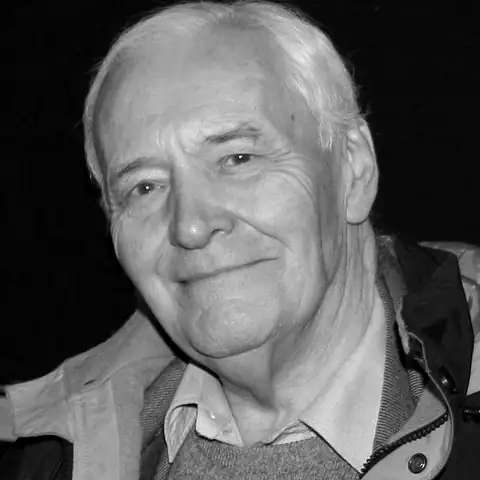
Tony Benn
Historical figureUnited Kingdom1925-2014

Tony Benn

Secretary of State for Energy (1975-1979) · Secretary of State for Industry (1974-1975)

Labour minister, diarist and leader of the party's left who gave up a peerage to stay in the Commons, argued for public ownership and was a prominent opponent of the Iraq war.

Profile on 12 axes9 of 12 documented
ECONOMYSTATESOCIETYWORLDOwnershipMarketsWelfareAuthoritySecurityStructureMoralityReligionTechnologyCultureTradeForeign
Where they stood

Tony Benn, axis by axis

  1. PublicPrivate
  2. PlannedFree
  3. SharedSelf-reliant
  4. DemocraticStrong leader

    He argued for more democracy in the state and in Labour, with referendums, constitutional reform and extra power for ordinary members. He scores strongly toward democratic checks.

  5. LibertyOrder
  6. 06StructureNo clear record
    LocalCentral

    His programme mixed national planning with a call to push power down to members and workers, which is too mixed to score.

  7. 07MoralityNo clear record
    ProgressiveTraditional
  8. SecularReligious

    Bible teaching and a nonconformist conscience fed his socialism, yet he did not seek a religious role in public life. He scores neutral.

  9. EmbraceCaution

    He supported Concorde and industrial modernising while Minister of Technology, which leans mildly toward embracing new technology.

  10. 10CultureNo clear record
    MulticulturalNational identity
  11. GlobalProtected

    The Bennite programme wanted a siege economy to shelter home industry and a British exit from the Common Market, so he scores toward protection.

  12. CooperationStrength

    He supported nuclear disarmament by Britain alone and was against the Iraq war and most Western interventions, but he also wanted Britain to leave NATO and the Common Market. On the peace side he scores toward cooperation.

3 axes have no clear record, so matching leaves them out.

Who was Tony Benn?

Benn grew up in a political family in London, where he was born in 1925. His father had been a Liberal, then served as a Labour minister and was raised to the peerage as Viscount Stansgate. Benn served in the RAF in the Second World War, worked as a BBC radio producer and won Bristol South East in 1950. In 1960 his father died, the title passed to him, and he lost his seat. He fought a three-year campaign, and the Peerage Act 1963 let him give up the peerage and return. In the governments of Harold Wilson and James Callaghan he held four posts: Postmaster General, Minister of Technology and Secretary of State for Industry and then for Energy. He lost the 1981 deputy leadership race to Denis Healey by a whisker. He lost his seat in 1983, won Chesterfield in 1984, ran for leader in 1988 and left the Commons in 2001. He died in 2014.

Political views

  • He wanted the main companies and banks in public hands, and he backed a siege economy to shelter British industry.Source: theguardian.com
  • He helped shape the Alternative Economic Strategy, which used planning and nationalisation to tackle Britain's economic problems.Source: theguardian.com
  • He championed holding the 1975 referendum on staying in the European Economic Community, and he campaigned for Britain to leave.Source: theguardian.com
  • He pushed for party reforms that gave activists and trade unionists a greater say over the manifesto and over choosing MPs.Source: theguardian.com
  • He supported Britain giving up nuclear weapons on its own, and he argued that war is a failure of diplomacy.Source: theguardian.com
  • He opposed the invasion of Iraq in 2003 and spoke at the huge Stop the War march in London.Source: theguardian.com

Legacy

Supporters remember Benn as a gifted speaker and parliamentarian who guarded the rights of the Commons and campaigned all his life for socialism, peace and democracy. His published diaries are a key record of British politics after the war. Critics say the Bennite left split Labour in the early 1980s. They link it to the departure of the MPs who formed the SDP and to the party's crushing defeat in 1983. Hostile newspapers dubbed him the most dangerous man in Britain, and some commentators felt his ideas hardly moved after the mid-1970s. Late in life, people of all parties came to respect him.

In their own words

“We are not just here to manage capitalism but to change society and to define its finer values.”
Quoted in his Guardian obituary, describing his aims as a minister in the 1960s

How close are you to Tony Benn?

Take the 12 Axes test and see which historical figure is your political twin, axis by axis.

Take the test

Tony Benn: questions

Was Tony Benn in the Labour Party?

Yes. He sat as a Labour MP for over fifty years in all, served in Labour cabinets and was the best-known voice of the party's left wing.

Why did Tony Benn renounce his title?

When his father died in 1960 the viscountcy passed to him, and peers could not sit in the Commons. He campaigned to change the rule. The Peerage Act 1963 then let him renounce the title and return as an MP.

What did Bennism stand for?

The name covers the ideas Benn promoted in the 1970s and 1980s. They included wide public ownership, economic planning, leaving the Common Market, ending Britain's nuclear weapons and giving ordinary Labour members more power.

Sources

Portrait: Tony Benn2.jpg by Isujosh, CC BY-SA 3.0, via Wikimedia Commons. Cropped and converted to grayscale by 12axes-test.com.