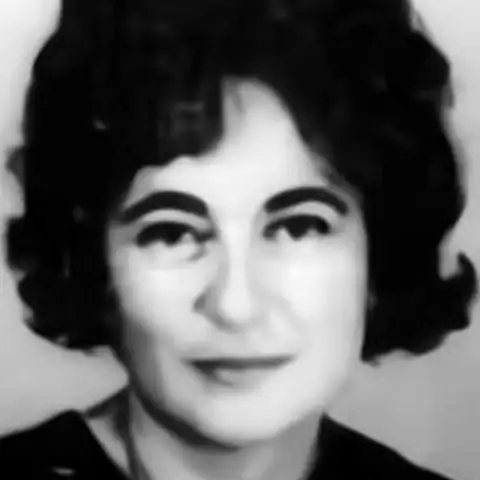
Who was Ruth First?
Ruth First was born on 4 May 1925 in Johannesburg to Julius and Matilda First, founder members of the Communist Party of South Africa. She studied at the University of the Witwatersrand and became a left-wing journalist, reporting on farm labor, migrant workers and townships. She married Joe Slovo in 1949, helped found the South African Congress of Democrats in 1953 and edited Fighting Talk. She was charged in the 1956 Treason Trial and acquitted in 1961. Detained in 1963, she later went into exile in Britain, taught in Mozambique from 1977, and was killed by a letter bomb in Maputo on 17 August 1982.
Political views
- Her investigative reporting covered farm labor, migrant workers and township conditions.Source: sahistory.org.za
- In 1953 she helped found the South African Congress of Democrats and edited its journal Fighting Talk.Source: sahistory.org.za
- She worked on the drafting committee of the Freedom Charter but was banned and could not attend the 1955 Congress of the People.Source: sahistory.org.za
- In 1950 she and Joe Slovo were among the first 600 people listed under the Suppression of Communism Act.Source: sahistory.org.za
- She and 155 others stood trial for treason from 1956 and were acquitted on 29 March 1961.Source: sahistory.org.za
- She was held in 1963 under the 90-day clause and then re-arrested, and she described the experience in her 1965 book 117 Days.Source: sahistory.org.za
- From 1977 she led research at the Centre for African Studies at Eduardo Mondlane University in Maputo, studying migrant mineworkers in a work published in 1983 as Black Gold.Source: sahistory.org.za
Legacy
Admirers remember First for brave reporting, for scholarship on migrant labor and for paying with her life for her opposition to apartheid. Ronald Segal called her death the final act of censorship. The Truth and Reconciliation Commission found that Jerry Raven built the bomb on the orders of Craig Williamson, and both received amnesty. Her politics were close to the Communist Party and the liberation movement, which the apartheid state treated as a security threat; she was banned, detained for 117 days without trial and forced into exile.