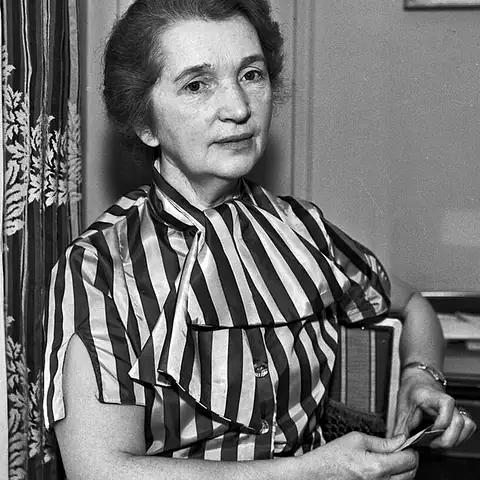
Who was Margaret Sanger?
Sanger was born in 1879 in Corning, New York, the sixth of eleven children. She trained as a nurse and worked among poor immigrant families, which convinced her that women needed control over childbearing. She joined the Women's Committee of the New York Socialist Party and took part in labor protests. In 1914 she launched The Woman Rebel and was indicted under obscenity law, then fled to England. In 1916 she opened a birth control clinic in Brooklyn and was jailed for 30 days. She founded the American Birth Control League in 1921, which became Planned Parenthood, and she helped bring about the oral contraceptive approved in 1960. She died in 1966.
Political views
- She coined the term birth control and argued it would give working-class women independence, better health and more time for their children and themselves.Source: john.curtin.edu.au
- She saw the ability to control family size as crucial to ending the cycle of women's poverty.Source: womenshistory.org
- She joined the Socialist Party's Women's Committee and took part in labor protests, including the strikes at Lawrence, Massachusetts and Paterson, New Jersey.Source: womenshistory.org
- She sought repeal of the federal Comstock laws, which barred birth control information from the mail as obscene.Source: womenshistory.org
- Her 1914 newsletter carried the slogan No Gods and No Masters.Source: john.curtin.edu.au
- She worked with the eugenics movement, which aimed to limit reproduction of groups it called undesirable. One account says she disagreed with its racial and class focus, but the link damaged her reputation.Source: womenshistory.org
- In 2020 Planned Parenthood of Greater New York removed her name from a Manhattan clinic over her enthusiasm for eugenics, though defenders note that eugenics was accepted across the political spectrum in her day.Source: freethought-trail.org
- She helped organize the First World Population Conference in Geneva in 1927 and served as the first president of the International Planned Parenthood Federation from 1952 to 1959.Source: john.curtin.edu.au
Legacy
Admirers credit Sanger with making contraception legal and widely available in the United States, and with building the organization that became Planned Parenthood. In 1931 H.G. Wells predicted her movement would grow to be the most influential of all time. Critics fault her for working with the eugenics movement, which sought to limit reproduction among groups it considered undesirable. Some accounts say her views were racist, while defenders say her statements avoided the overt racism common in that movement. Doctors and the Catholic Church opposed her throughout her career, and the Comstock laws she fought did not end until 1971.