12axes-testTake the test
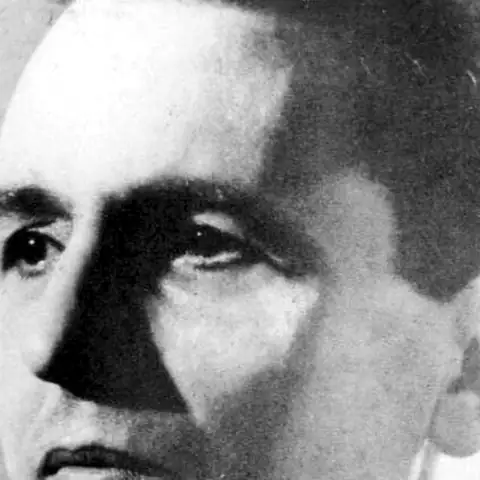
Luís Carlos Prestes
Historical figureBrazil1898-1990

Luís Carlos Prestes

General Secretary of the Brazilian Communist Party (1943-1980) · Leader of the Prestes Column

Brazilian army officer who led the Prestes Column through the interior in the 1920s, then became the long-time head of the Brazilian Communist Party after embracing Marxism-Leninism in exile.

Profile on 12 axes6 of 12 documented
ECONOMYSTATESOCIETYWORLDOwnershipMarketsWelfareAuthoritySecurityStructureMoralityReligionTechnologyCultureTradeForeign
Where they stood

Luís Carlos Prestes, axis by axis

  1. PublicPrivate

    Reflects his long leadership of a communist party that sought a stage-by-stage revolution.

  2. PlannedFree
  3. SharedSelf-reliant
  4. DemocraticStrong leader

    He ran a loyalist Comintern line and the review used here ties his passivity inside the party to Stalinist culture. Yet he sat in an elected Senate and signed the 1946 Constitution. Moderately toward strong leadership.

  5. LibertyOrder
  6. 06StructureNo clear record
    LocalCentral
  7. 07MoralityNo clear record
    ProgressiveTraditional
  8. 08ReligionNo clear record
    SecularReligious
  9. 09TechnologyNo clear record
    EmbraceCaution
  10. 10CultureNo clear record
    MulticulturalNational identity
  11. 11TradeNo clear record
    GlobalProtected
  12. CooperationStrength

    He lived in the Soviet Union and sat on the Comintern executive committee, so his loyalty was to international communism.

6 axes have no clear record, so matching leaves them out.

Who was Luís Carlos Prestes?

Luís Carlos Prestes was born in 1898 in Porto Alegre and rose as an army captain in the rebel lieutenants' movement. His Column marched about 25,000 km through thirteen states between 1924 and 1927 and ended in exile in Bolivia. In Argentina he studied Marxism and, after years in Moscow, joined the Brazilian Communist Party in 1934 and was elected to the Comintern executive committee. He was honorary president of the National Liberation Alliance in the failed 1935 uprising and spent nine years in prison. Elected senator in 1945, he led the party until 1980 and died in Rio de Janeiro in 1990.

Political views

  • Led the rebel Column through 13 states from December 1924 to February 1927 hoping to spark an uprising against the Old Republic. The mass revolt never came.Source: sites.usp.br
  • Studied Marxism in exile in Argentina, moved to the Soviet Union in 1931 and worked as an engineer while studying Marxism-Leninism.Source: marxists.org
  • Joined the Brazilian Communist Party in 1934 and won a seat on the executive committee of the Communist International.Source: sites.usp.br
  • Was honorary president of the National Liberation Alliance when the communist-led uprising began on 23 November 1935. It was crushed in Rio de Janeiro four days later.Source: sites.usp.br
  • Served as party General Secretary from 1943 to 1980, and in 1946 took a Senate seat for the Federal District and signed the 1946 Constitution.Source: marxists.org
  • A critical review says the party under him believed in a stage-by-stage bourgeois-democratic revolution and a progressive national bourgeoisie, and that he accepted isolation inside the party almost passively.Source: fpabramo.org.br

Legacy

Admirers see Prestes as a revolutionary whose Column became a living myth against the oligarchic Old Republic, and as a man who endured nine years of prison and long exile for his cause. His partner Olga Benario was deported to Nazi Germany and executed in 1942. Critics note that he followed the Moscow line for decades and that the 1935 uprising he fronted failed within days. A left critic also charges that the party's stagist strategy sidelined the working class, and that he never fully confronted Stalinism. He broke with the party leadership around 1980 and died in 1990.

How close are you to Luís Carlos Prestes?

Take the 12 Axes test and see which historical figure is your political twin, axis by axis.

Take the test

Luís Carlos Prestes: questions

Was Luís Carlos Prestes a communist?

Yes. He studied Marxism in exile, joined the Brazilian Communist Party in 1934 and was its General Secretary from 1943 to 1980.

What was the Prestes Column?

A rebel force of army lieutenants and soldiers that marched about 25,000 km through thirteen Brazilian states from 1924 to 1927 and ended in exile in Bolivia.

What happened in the 1935 uprising?

A communist-led revolt began in Natal on 23 November 1935 and was crushed in Rio de Janeiro by 27 November. Prestes was arrested in March 1936 and held for nine years.

Sources

Portrait: Bundesarchiv Bild 183-13290-0017, Luis Carlos Prestes.jpg by Unknown author, CC BY-SA 3.0 de, via Wikimedia Commons. Cropped and converted to grayscale by 12axes-test.com.