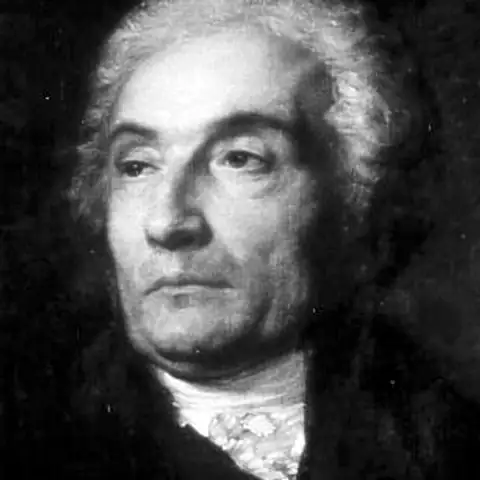
Who was Joseph de Maistre?
Chambéry, where Joseph de Maistre was born, then belonged to the Duchy of Savoy within the Kingdom of Sardinia. Jesuit teachers educated him, and like his father he sat as a magistrate in the Savoy Senate. French revolutionary armies took Savoy in 1792, and he fled. He served the Sardinian king as a diplomat and spent long years in Russia as envoy at the court in St. Petersburg. He wrote Considerations on France in 1796, then On the Pope, an essay on how political constitutions come into being, and the St. Petersburg Dialogues, which came out after he died in Turin in 1821.
Political views
- Read the Revolution and the Terror as God's punishment on France for taking up Enlightenment secularism and equality.Source: enlightenment-revolution.org
- Described an attack on sovereignty as among the gravest of crimes and saw the killing of Louis XVI as a crime by the whole nation.Source: revolution.chnm.org
- Said constitutions grow slowly under Providence and cannot be invented by reason, and he scorned written constitutions as mere paper.Source: en.wikipedia.org
- Put order above every other political value and thought it rested on obedience to God and to rightful kings.Source: enlightenment-revolution.org
- Attacked Rousseau and the Encyclopaedists for assuming that people are mainly rational and for preferring abstract ideas to the lessons of history.Source: en.wikipedia.org
- In On the Pope he defended papal infallibility on matters of faith, likening the pope to a final court of appeal.Source: enlightenment-revolution.org
- Treated the executioner and the death penalty as the foundation of all obedience to authority, and in letters he defended the Spanish Inquisition.Source: enlightenment-revolution.org
Legacy
Maistre helped start the Catholic counter-revolutionary tradition. His case for papal authority is often linked to the definition of papal infallibility at the First Vatican Council in 1870, and French traditionalist and reactionary writers drew on him heavily. Contemporaries who admired the Enlightenment found his views repellent, and the historian Isaiah Berlin thought he anticipated fascism in some respects. Others prize his work as a sharp critique of abstract reason and as an early look at the role of violence in society.
In their own words
“Every nation, like every individual, has a mission which it must fulfill.”