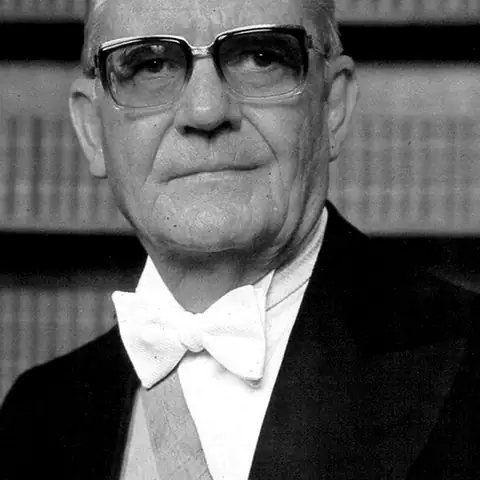
Who was Ernesto Geisel?
Ernesto Geisel grew up in Rio Grande do Sul in a Lutheran family of German descent. He became an army officer and joined the 1930 revolution. Under the first military president he led the Military Household, and from 1969 to 1973 he ran Petrobras, the state oil firm. The generals picked him and an electoral college approved him, so no voters chose him. Sworn in during March 1974, he promised to loosen control slowly and safely. He leaned on state spending for energy and heavy industry. He clashed with hard-liners in the army. In March 1979 he gave power to João Figueiredo. He died in 1996.
Political views
- His stated plan was a 'slow, gradual and secure' opening, which meant as much development as possible with only the security that was truly needed.Source: www18.fgv.br
- The Second National Development Plan of 1975-1979 poured state money into energy, steel, petrochemicals and machinery.Source: planalto.gov.br
- In April 1977 he shut down Congress and imposed constitutional changes, including senators chosen indirectly, to protect his party's majority.Source: planalto.gov.br
- After Manoel Fiel Filho, a metalworker, died in army hands in January 1976, he dismissed the Second Army's commander. Journalist Vladimir Herzog had died at that same site three months before.Source: www18.fgv.br
- He signed the 1977 law that made divorce legal in Brazil.Source: planalto.gov.br
- He recognised Angola's MPLA government in 1975. In 1977, amid quarrels about human rights and nuclear matters, he ended Brazil's 1952 military deal with Washington.Source: www18.fgv.br
- He pushed through the 1978 amendment that ended the institutional acts, AI-5 among them, from January 1979.Source: planalto.gov.br
Legacy
Admirers say Geisel began the road to civilian rule, which arrived in 1985. They also credit him with standing up to hard-liners in the army and with expanding power and industry, including dams and nuclear plants. Critics answer that torture and killings went on under his rule. Vladimir Herzog died in October 1975 at the DOI-CODI centre in São Paulo, and officials called it suicide. So did Manoel Fiel Filho, in January 1976. A CIA memo dated April 1974 and made public in 2018 said Geisel allowed summary executions of 'dangerous subversives' to continue, with about 104 people killed in the year before. Economists add that the development plan was paid for with foreign loans, which fed the 1980s debt crisis. Historians often say he won control of the opening when he fired Army Minister Sylvio Frota in 1977. Frota was a hard-line contender to succeed him.
In their own words
“The maximum possible development with the minimum indispensable security.”