12axes-testTake the test
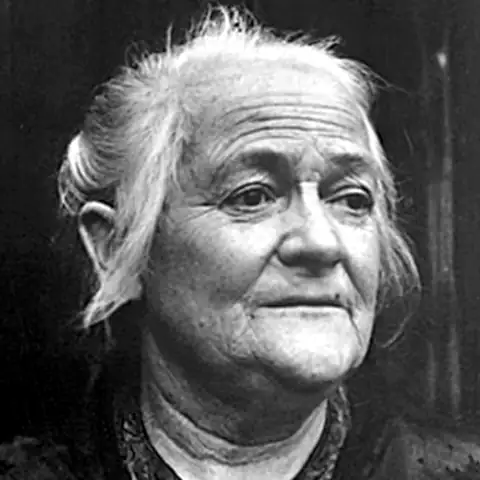
Clara Zetkin
Historical figureGermany1857-1933

Clara Zetkin

Member of the German Reichstag (1920-1933) · Editor of Die Gleichheit

German Marxist who built the socialist women's movement, helped win International Women's Day, opposed the First World War and sat as a Communist in the Reichstag until Hitler took power.

Profile on 12 axes6 of 12 documented
ECONOMYSTATESOCIETYWORLDOwnershipMarketsWelfareAuthoritySecurityStructureMoralityReligionTechnologyCultureTradeForeign
Where they stood

Clara Zetkin, axis by axis

  1. PublicPrivate
  2. PlannedFree
  3. SharedSelf-reliant
  4. DemocraticStrong leader

    She sat in the Reichstag for thirteen years and in 1932 denounced the Nazis from its chair, yet she backed the Bolsheviks and, the encyclopedia entry says, accepted Stalinist policies through her silence. Near the middle.

  5. 05SecurityNo clear record
    LibertyOrder
  6. 06StructureNo clear record
    LocalCentral
  7. ProgressiveTraditional

    She fought for equal pay and women's political equality, but also valued mothers' roles and rejected a separate women's campaign apart from the working-class movement.

  8. 08ReligionNo clear record
    SecularReligious
  9. 09TechnologyNo clear record
    EmbraceCaution
  10. 10CultureNo clear record
    MulticulturalNational identity
  11. 11TradeNo clear record
    GlobalProtected
  12. CooperationStrength

    She organized an antiwar women's conference in 1915 and worked inside the Communist International. Strongly internationalist.

6 axes have no clear record, so matching leaves them out.

Who was Clara Zetkin?

Clara Zetkin, born Clara Eissner in Saxony in 1857, trained as a teacher in Leipzig and became a Marxist. From 1891 she edited the women's paper Die Gleichheit for about 25 years. In 1895 she became the first woman on the executive committee of the Social Democratic Party. She organized the first International Socialist Women's Conference in 1907. She opposed the First World War, left the majority party and joined the Communist Party in 1919. She sat in the Reichstag from 1920 to 1933 and spent much of her time in the Soviet Union. She died in a Moscow sanatorium in June 1933.

Political views

  • Argued in 1896 that the women's question arose with capitalism, and that working women's final aim was proletarian political rule rather than competition with men.Source: marxists.org
  • Accepted the economic demands of middle-class feminism as justified but said political equality alone would not shift the balance of class power.Source: marxists.org
  • Held that proletarian women should fight together with working men, through socialist agitation among women, rather than in separate women's campaigns.Source: marxists.org
  • Argued that women's emancipation depended on ending capitalism, and helped win a 1889 Second International resolution for equal pay and equal rights.Source: encyclopedia.com
  • Won support in 1910 for 8 March as International Women's Day.Source: encyclopedia.com
  • Opposed the SPD's support for the war and organized an antiwar women's conference in Bern in 1915, and was imprisoned until 1916.Source: encyclopedia.com
  • Spoke at Comintern congresses in 1921 and 1922 and wrote against fascism in 1923, including the piece Fight Fascism!Source: marxists.org

Legacy

Admirers credit Zetkin with making working women's rights a central cause of socialism, with the idea of an International Women's Day and with early, public warnings about fascism. Critics note that she subordinated feminism to class struggle and dismissed cross-class women's movements. After 1919 she backed the Bolsheviks and the Communist International, and her entry in one encyclopedia says she accepted Stalinist policies through her silence. As the oldest member of the Reichstag in 1932, she opened its session and denounced the Nazis, then left for the Soviet Union before Hitler's crackdown.

How close are you to Clara Zetkin?

Take the 12 Axes test and see which historical figure is your political twin, axis by axis.

Take the test

Clara Zetkin: questions

Did Clara Zetkin invent International Women's Day?

She is credited with winning support in 1910 for 8 March as International Women's Day. She had organized the international socialist women's movement behind it.

Was Clara Zetkin a feminist?

She fought for women's equal pay and political rights, but rejected bourgeois feminism as inadequate. She argued that women's emancipation required ending capitalism, in common cause with working men.

Was Clara Zetkin a communist?

Yes. She opposed the First World War, left the majority Social Democrats, and joined the German Communist Party in 1919. She sat for it in the Reichstag until 1933.

Sources