12axes-testTake the test
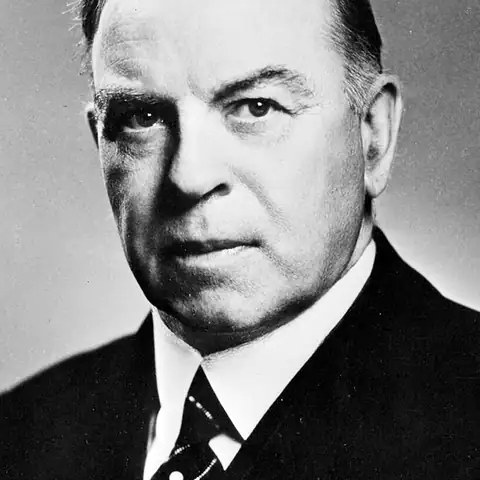
William Lyon Mackenzie King
Historical figureCanada1874-1950

William Lyon Mackenzie King

10th Prime Minister of Canada (1921-1926, 1926-1930, 1935-1948) · Leader of the Liberal Party of Canada (1919-1948)

King held the office of Canadian prime minister longer than anyone else. He won greater independence from Britain and started the welfare state, but his governments also shut out Chinese migrants, refused Jewish refugees and imprisoned Japanese Canadians.

Profile on 12 axes10 of 12 documented
ECONOMYSTATESOCIETYWORLDOwnershipMarketsWelfareAuthoritySecurityStructureMoralityReligionTechnologyCultureTradeForeign
Where they stood

William Lyon Mackenzie King, axis by axis

  1. PublicPrivate
  2. PlannedFree
  3. SharedSelf-reliant

    He added unemployment insurance and family allowances after means-tested old age pensions, but he moved cautiously and often under pressure. The score leans moderately toward shared provision.

  4. DemocraticStrong leader
  5. LibertyOrder

    During the Second World War his government used the War Measures Act to intern over 22,000 Japanese Canadians. That puts the score on the order side, away from civil liberty.

  6. LocalCentral
  7. ProgressiveTraditional
  8. 08ReligionNo clear record
    SecularReligious

    His belief in spiritualism stayed private and no policy is tied to it, so this axis is left empty.

  9. 09TechnologyNo clear record
    EmbraceCaution

    No lasting stance on technology rules is documented, so this axis is left empty.

  10. MulticulturalNational identity

    The 1923 Chinese Immigration Act, the refusal to take in Jewish refugees from Europe (the MS St. Louis passengers among them) and the Japanese Canadian internment all point strongly toward restriction.

  11. GlobalProtected
  12. CooperationStrength

    In the 1930s he steered clear of commitments, and after a 1937 meeting with Hitler he badly misjudged him. Later he took Canada through the war and into the United Nations. The record is mixed, so the score sits near the middle.

2 axes have no clear record, so matching leaves them out.

Who was William Lyon Mackenzie King?

Born in 1874 in what is now Kitchener, Ontario, Mackenzie King was a grandson of the 1837 rebel leader William Lyon Mackenzie. His studies in economics took him to Toronto, Chicago and Harvard. Back in Canada he was named the first deputy minister of labour, and later he advised the Rockefeller family's interests on how to handle labour disputes. The Liberals picked him as leader in 1919. He became prime minister in 1921 and served in three separate spells, adding up to more than 21 years, before retiring in 1948. Canada fought the Second World War under his leadership. He died in 1950.

Political views

  • In 1922, during the Chanak Crisis, he would not commit Canada to help Britain unless Parliament agreed. He wanted Canadians to make their own decisions inside the Empire.Source: en.wikipedia.org
  • Means-tested old age pensions were already law when his government added unemployment insurance in 1940 and family allowances in 1944.Source: en.wikipedia.org
  • He feared splitting the country, so he delayed sending conscripts overseas. In 1942 he summed up his stance as 'not necessarily conscription but conscription if necessary'.Source: biographi.ca
  • His 1918 book Industry and Humanity called for talks and compromise between workers and employers, and said the wider community and the state could step in when their interests were ignored.Source: biographi.ca
  • His government's Chinese Immigration Act of 1923 closed the door to nearly all Chinese newcomers.Source: en.wikipedia.org
  • He would not relax the rules for Jews trying to leave Europe. In 1939 his government sent away the MS St. Louis and its 907 Jewish passengers.Source: pm.gc.ca
  • From 1942 about 22,000 Japanese Canadians were removed from the British Columbia coast and interned under his government.Source: cbc.ca

Legacy

Admirers argue that King held a fractured country together through the depression and the war, kept 1917's conscription bitterness from returning, loosened Britain's hold on Canada and laid the base for social programs. Polls of historians often put him among the most effective prime ministers. Critics focus on the human price of his immigration and wartime policies. Japanese Canadians, about 22,000 of them, were uprooted, their property was sold off, and thousands were pushed to leave for Japan after the war. Brian Mulroney apologized in 1988. Very few Jews from Nazi Europe were admitted, and Justin Trudeau apologized in 2018 for the St. Louis, since more than 200 of its passengers were later killed after being returned to Europe. His diaries also revealed a lifelong interest in spiritualism.

In their own words

“not necessarily conscription but conscription if necessary”
Speech in the House of Commons, 10 June 1942

How close are you to William Lyon Mackenzie King?

Take the 12 Axes test and see which historical figure is your political twin, axis by axis.

Take the test

William Lyon Mackenzie King: questions

Which party did Mackenzie King lead?

He was Liberal leader for 29 years, from 1919 until 1948. In total he spent more than 21 years as prime minister, which is a Canadian record.

Why is Mackenzie King a controversial figure?

Three episodes stand out: the 1923 law that all but ended Chinese immigration, the refusal of Jewish refugees from Nazi Germany including those on the MS St. Louis, and the wartime internment of about 22,000 Japanese Canadians. Later governments apologized for the last two.

What did Mackenzie King do well?

Supporters credit him with keeping a divided Canada together through depression and war, avoiding a second conscription crisis, gaining more independence from Britain and beginning the welfare state.

Sources