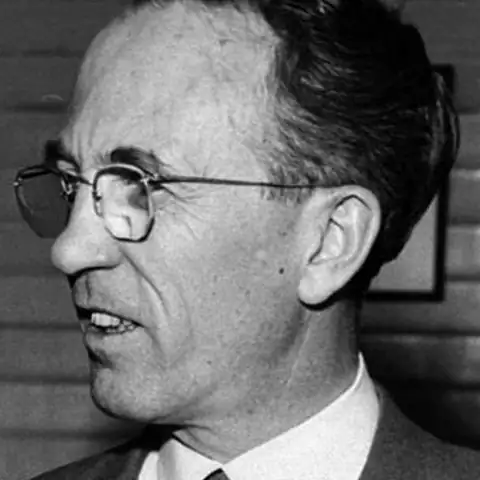
Who was Tommy Douglas?
Falkirk, Scotland, was Tommy Douglas's birthplace in 1904. His family took him to Winnipeg when he was a boy. He trained as a Baptist minister and took a church in Weyburn, Saskatchewan. The hardship of the Great Depression pushed him into politics. In 1935 he was elected to the Commons as a member of the Co-operative Commonwealth Federation. Nine years later he led the CCF to victory in Saskatchewan and served as premier until 1961. Next came the leadership of the newly formed federal NDP, which he kept until 1971. Douglas died in 1986.
Political views
- Saskatchewan got public hospital insurance and then medicare under his government. That is why he is called the father of medicare.Source: cbc.ca
- The CCF, a democratic socialist party, came to power in Saskatchewan in 1944 with him as leader.Source: thecanadianencyclopedia.ca
- His government set up a public car insurance service, brought electric power to farms and allowed public servants to unionize.Source: en.wikipedia.org
- He built Crown corporations and widened public services, including power and insurance.Source: en.wikipedia.org
- The Saskatchewan Bill of Rights, passed under him, protected basic freedoms and equality against abuse by the state and by private parties.Source: en.wikipedia.org
- In the 1970 October Crisis he was the leading voice in Parliament against use of the War Measures Act.Source: en.wikipedia.org
- His politics rested on the social gospel, the idea that Christian ethics call for economic justice.Source: thecanadianencyclopedia.ca
- His 1933 thesis supported eugenic measures. Once he was premier, he had turned down proposals for sterilization.Source: thecanadianencyclopedia.ca
Legacy
Canadians remember Douglas above all for medicare. CBC viewers voted him the Greatest Canadian in 2004, and in 2019 Ottawa recognized him as a figure of national historic importance. Supporters say he proved a socialist government could balance its books and still build universal public services. Critics of the day warned that public insurance and Crown corporations would drive up costs and squeeze out private firms. Saskatchewan's doctors went on strike against medicare in 1962. His early thesis on eugenics has also drawn criticism since, though the Canadian Encyclopedia balances it against his later rejection of such ideas.