12axes-testTake the test
Tiradentes
Historical figureBrazil1746-1792

Tiradentes

Leader of the Inconfidência Mineira · Army ensign (alferes) in the Dragões Reais de Minas

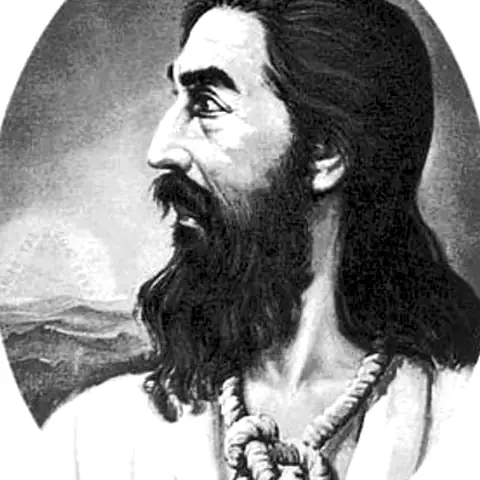
Brazilian army ensign and part-time dentist who led the failed 1789 Inconfidência Mineira against Portuguese rule, and who was hanged in 1792 and later honored as a national martyr.

Profile on 12 axes6 of 12 documented
ECONOMYSTATESOCIETYWORLDOwnershipMarketsWelfareAuthoritySecurityStructureMoralityReligionTechnologyCultureTradeForeign
Where they stood

Tiradentes, axis by axis

  1. 01OwnershipNo clear record
    PublicPrivate
  2. PlannedFree

    He is documented only as an opponent of the heavy Crown taxes on gold, so this score is a thin inference.

  3. 03WelfareNo clear record
    SharedSelf-reliant
  4. DemocraticStrong leader

    The plotters wanted to replace Portuguese royal rule with a republic, and Tiradentes admired the United States Constitution. The plans never went past the discussion stage.

  5. LibertyOrder

    He confessed to leading the plot but there is no record of his views on policing or civil liberties; the score is a low-confidence judgment.

  6. LocalCentral

    The plot centered on an independent Minas Gerais, which points to local rule, though the plans were never worked out.

  7. 07MoralityNo clear record
    ProgressiveTraditional
  8. 08ReligionNo clear record
    SecularReligious
  9. 09TechnologyNo clear record
    EmbraceCaution
  10. 10CultureNo clear record
    MulticulturalNational identity
  11. GlobalProtected

    Little is documented on trade beyond the fight over taxes, so the score stays near the middle.

  12. CooperationStrength

    His cause was sovereignty from Portugal, not military expansion, so the score is only mildly positive.

6 axes have no clear record, so matching leaves them out.

Who was Tiradentes?

Joaquim José da Silva Xavier, called Tiradentes, was born in 1746 in Minas Gerais. He worked as a miner, peddler and amateur dentist, which gave him his nickname, and he served as an ensign in the royal dragoons. In the late 1780s he became the most active recruiter of the Inconfidência Mineira, a conspiracy of the region's elite against Portuguese rule, which the colonial authorities feared would flare when a forced tax collection began. An informer betrayed the plot, and Tiradentes was arrested in Rio de Janeiro in May 1789. After three years of inquiry, he alone received the death sentence and was executed on 21 April 1792.

Political views

  • The plotters agreed that Brazil should be independent of Portugal, though they disagreed about much else, including whether to have a republic or a monarchy.Source: encyclopedia.com
  • Tiradentes favored a republic and admired the United States Constitution.Source: encyclopedia.com
  • The conspiracy grew out of anger over Portuguese taxes, including the 20 percent gold levy (the quinto) and the planned forced collection of debts (the derrama).Source: historiadomundo.com.br
  • He worked as a propagandist for the movement, traveling and recruiting supporters, and was described as the most radical of the conspirators.Source: historiadomundo.com.br
  • Unlike the other plotters, he did not deny taking part, and a royal letter later reduced the other sentences but not his.Source: preparaenem.com
  • The sentence read on 18 April 1792 found the plotters guilty of treason against Queen Maria. Tiradentes was hanged, his body quartered, and his head displayed in Vila Rica.Source: preparaenem.com

Legacy

Brazilians honor Tiradentes as a symbol of liberty and as a martyr of independence. Republicans in the late nineteenth century made him a national hero, and 21 April is now a holiday. Historians caution that the myth outgrew the facts. The plot never moved beyond planning, and the conspirators disagreed over slavery and the form of government. Critics of the myth note that he was executed for a conspiracy that never took action, and the image of a lone republican martyr is more than the surviving record can bear. Admirers answer that his open admission of his part showed real courage.

How close are you to Tiradentes?

Take the 12 Axes test and see which historical figure is your political twin, axis by axis.

Take the test

Tiradentes: questions

Who was Tiradentes?

Joaquim José da Silva Xavier, nicknamed Tiradentes, was an army ensign and amateur dentist in Minas Gerais. He led the Inconfidência Mineira against Portuguese rule and was hanged on 21 April 1792.

Why is Tiradentes a national hero in Brazil?

He was the only conspirator executed, and republicans of the late nineteenth century made him a martyr of independence. His death day is now a national holiday.

Did Tiradentes want to abolish slavery?

The sources say the plotters were divided on it, and no clear position of his own is documented here.

Sources