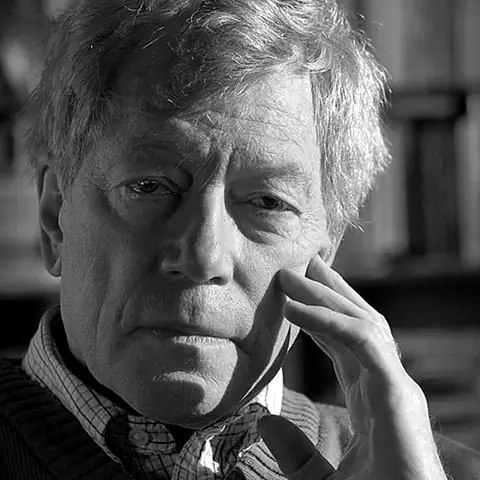
Who was Roger Scruton?
Lincolnshire was Scruton's home county, and he was born there in 1944. He studied philosophy at Cambridge. Watching the Paris student uprising of May 1968, he said, made him a conservative. He lectured at Birkbeck in London from 1971 to 1992 and later took posts in Britain and the US. He published more than fifty books, covering beauty, music, buildings, sex, wine, faith and politics. Two of them are The Meaning of Conservatism and How to Be a Conservative. He ran The Salisbury Review from 1982 to 2001 and wrote newspaper columns. A 2016 knighthood honored his work. In 2018 the government asked him to co-chair a body on housing design. He died of cancer in January 2020.
Political views
- Defined conservatism as the wish to protect inherited institutions and customs instead of demolishing them.Source: dezeen.com
- Between 1979 and 1989 he backed dissident academics under Communist rule in Czechoslovakia, helping run teaching in secret.Source: en.wikipedia.org
- In Green Philosophy he claimed that oikophilia, a love of one's home, is a stronger basis for caring for nature than state regulation or international campaigns.Source: philosophynow.org
- Supported carbon pricing and similar steps that make polluters carry the costs of the harm they cause.Source: philosophynow.org
- Championed classical and traditional architecture and attacked many modern buildings.Source: dezeen.com
- Backed Brexit, seeing the EU as a threat to national self-government.Source: en.wikipedia.org
- His book Our Church makes the case that the Church of England still has a role in national life.Source: en.wikipedia.org
Legacy
Scruton's fans include Conservative politicians and anti-communist dissidents in Central Europe, who saw him as a leading conservative philosopher. Czech, Polish and Hungarian authorities gave him honors. On the left, critics accused him of hostility to homosexuals, Muslims and others, pointing to his stance against adoption by same-sex couples and to things he said in interviews. A 2019 New Statesman interview cost him his post as a government housing adviser. When the full recording showed that context had been left out, the magazine apologized and he was reinstated. Several architects who disagreed with him found him a gracious opponent.
In their own words
“I knew I wanted to conserve things rather than pull them down.”