12axes-testTake the test
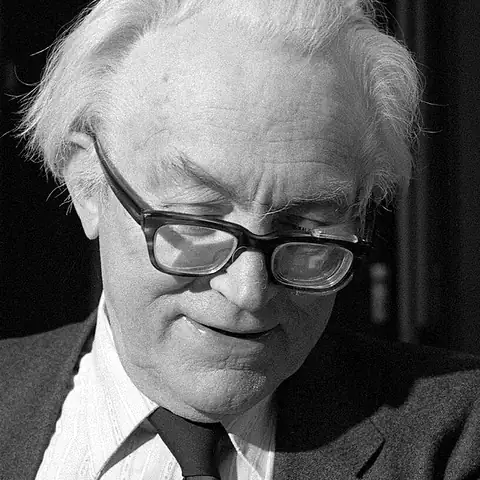
Michael Foot
Historical figureUnited Kingdom1913-2010

Michael Foot

Leader of the Labour Party (1980-1983) · Secretary of State for Employment (1974-1976)

Writer and democratic socialist who led Labour from 1980 to 1983. He was a CND founder who argued for disarmament and, as a minister, gave trade unions back their rights.

Profile on 12 axes11 of 12 documented
ECONOMYSTATESOCIETYWORLDOwnershipMarketsWelfareAuthoritySecurityStructureMoralityReligionTechnologyCultureTradeForeign
Where they stood

Michael Foot, axis by axis

  1. PublicPrivate
  2. PlannedFree
  3. SharedSelf-reliant
  4. DemocraticStrong leader
  5. LibertyOrder
  6. LocalCentral

    Devolution for Scotland and Wales was a cause he worked on in the 1970s. Leans toward local.

  7. ProgressiveTraditional
  8. SecularReligious

    He was an honorary associate of the National Secular Society and backed the British Humanist Association. Secular.

  9. 09TechnologyNo clear record
    EmbraceCaution
  10. MulticulturalNational identity

    Resisted Harold Wilson's 1960s steps to limit immigration. Leans toward the multicultural side.

  11. GlobalProtected

    He fought British entry to the European Community and took Labour into 1983 promising to pull out, with an active state industrial policy. Leans toward protection.

  12. CooperationStrength

    He helped found CND and led Labour into 1983 as a unilateralist. But he also backed the Falklands task force and, later, NATO action over Yugoslavia. Mildly toward cooperation.

One axis has no clear record, so matching leaves it out.

Who was Michael Foot?

Foot's father, Isaac, was a Liberal MP, and Michael grew up in Plymouth, where he was born in 1913. At Oxford he presided over the Union, and in the 1930s he joined Labour. Journalism came first: Tribune, the Evening Standard and the 1940 pamphlet Guilty Men on appeasement. He won Plymouth Devonport in 1945, lost it in 1955, and took Aneurin Bevan's old seat of Ebbw Vale in 1960, which he held until 1992. Under Harold Wilson and James Callaghan he served in cabinet, notably as Employment Secretary. Labour chose him as leader in 1980. He quit after the 1983 defeat.

Political views

  • Co-founded CND and was one of the leading British voices for giving up nuclear weapons unilaterally.Source: theguardian.com
  • As Employment Secretary he reversed the union curbs of the 1971 Industrial Relations Act and helped create the social contract with the unions.Source: theguardian.com
  • Campaigned for Britain to leave the European Economic Community, as he did in the 1975 referendum.Source: theguardian.com
  • Pushed for assemblies in Scotland and Wales. Voters turned them down in the referendums of 1979.Source: theguardian.com
  • His 1983 manifesto promised that Britain would give up its nuclear arms alone, quit the EEC, abolish the House of Lords and nationalise the banks.Source: en.wikipedia.org
  • Opposed curbs on immigration and the war in Vietnam, and in 1968 condemned the Soviet crackdown in Prague.Source: en.wikipedia.org

Legacy

His fans remember Foot as a principled democratic socialist, a brilliant speaker in the Commons and a man of letters devoted to freedom. Some argue he held Labour together when left and right were close to splitting. Critics call his time as leader a story of division and a heavy defeat. A Labour MP nicknamed the 1983 manifesto the longest suicide note in history, and the party's vote share was its worst since the 1920s. In 1995 a KGB defector alleged that Foot had been an agent of influence. There was no evidence, and Foot won big libel damages from the Sunday Times.

How close are you to Michael Foot?

Take the 12 Axes test and see which historical figure is your political twin, axis by axis.

Take the test

Michael Foot: questions

Was Michael Foot a socialist?

Yes, he called himself a democratic socialist. He favored public ownership, strong unions and a generous welfare state, and the 1983 manifesto he fronted proposed taking banks into public hands.

Why did Labour do so badly in 1983?

Historians list Labour's infighting, the new SDP split, the boost the Falklands War gave Margaret Thatcher and a radical manifesto. Labour polled roughly 28 per cent, its poorest showing since the 1920s.

What was Michael Foot's view on nuclear weapons?

He wanted Britain to scrap its own nuclear arms without waiting for other countries to act. He helped found CND, and unilateral disarmament was central to Labour's 1983 platform.

Sources