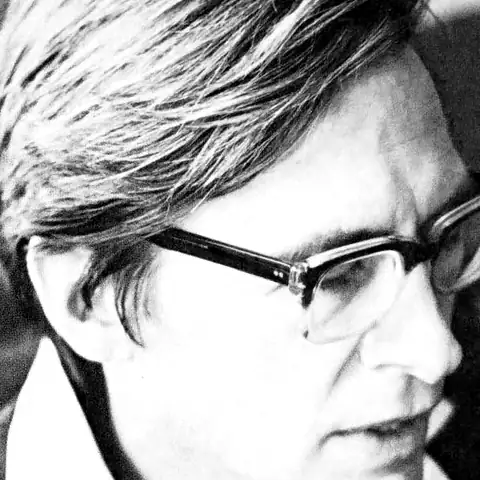
12axes-testTake the test
John Rawls
Historical figureUnited States1921-2002

John Rawls

Political philosopher · Professor at Harvard University

American philosopher who argued that a fair society protects equal basic freedoms and allows unequal rewards only if they help those who start with the least.

Profile on 12 axes10 of 12 documented
ECONOMYSTATESOCIETYWORLDOwnershipMarketsWelfareAuthoritySecurityStructureMoralityReligionTechnologyCultureTradeForeign
Where they stood

John Rawls, axis by axis

  1. PublicPrivate

    He favoured a property-owning democracy or liberal socialism over welfare-state capitalism, and left the exact mix open. The score is moderately public.

  2. PlannedFree
  3. SharedSelf-reliant
  4. DemocraticStrong leader
  5. LibertyOrder
  6. LocalCentral

    His theory is about the basic structure of society as a whole, not about regional versus national government, so this sits at the middle.

  7. ProgressiveTraditional
  8. SecularReligious

    Under public reason, citizens must explain political choices in terms all can share. That is a firm but not hostile line between religion and politics.

  9. 09TechnologyNo clear record
    EmbraceCaution
  10. MulticulturalNational identity
  11. 11TradeNo clear record
    GlobalProtected

    He left no sustained view on trade policy, so this axis is null.

  12. CooperationStrength

    The Law of Peoples backs cooperation and human rights but allows action against grave abuses. The score is a judgment call.

2 axes have no clear record, so matching leaves them out.

Who was John Rawls?

The philosopher John Rawls came from Baltimore, born there in 1921. He studied at Princeton, then Cornell and Oxford, and from 1962 he taught at Harvard for over thirty years. His 1971 book A Theory of Justice brought new life to political philosophy in the English-speaking world. In Political Liberalism, The Law of Peoples and Justice as Fairness he asked two questions. How can people with clashing religious and moral beliefs share one just society? And how should liberal societies deal with other peoples? He died in 2002.

Political views

  • Asked readers to imagine choosing the rules of justice from an original position, behind a veil of ignorance, with nobody knowing their own place in society.Source: plato.stanford.edu
  • Said every person has an equal claim to a full set of basic liberties, and that these come before economic aims.Source: plato.stanford.edu
  • Held that inequalities of wealth and power are fair only if opportunities are truly equal and the worst-off gain from them.Source: plato.stanford.edu
  • Turned down welfare-state capitalism. He preferred a system in which wealth and capital are widely shared among citizens, or else liberal socialism.Source: plato.stanford.edu
  • Proposed public reason: citizens should defend political decisions with values that others can reasonably accept.Source: plato.stanford.edu
  • Wrote that peoples should respect human rights and avoid interfering in each other's affairs, with an exception for grave abuses.Source: plato.stanford.edu

Legacy

Many rank Rawls as the leading English-language thinker on politics of his century. His work shaped arguments about equality, liberalism and public policy. Admirers credit him with a careful defence of liberal democracy and fair sharing of resources. Libertarians, led by Robert Nozick, said his principles trample on individual property rights. Communitarians said he assumed an unrealistic, detached picture of the self. Some on the left felt his theory did too little about inequality.

In their own words

“Each person has the same indefeasible claim to a fully adequate scheme of equal basic liberties, which scheme is compatible with the same scheme of liberties for all.”
Justice as Fairness: A Restatement, 2001

How close are you to John Rawls?

Take the 12 Axes test and see which historical figure is your political twin, axis by axis.

Take the test

John Rawls: questions

What is Rawls's veil of ignorance?

Picture people choosing the rules of a society while blind to their own class, talents and beliefs. Rawls thought that blindness would push them toward rules that are fair to all.

Was John Rawls a socialist?

He was a liberal first, with equal basic liberties at the top. Late in life he said that his principles could be met by a property-owning democracy or by liberal socialism. Welfare-state capitalism, he thought, fell short.

What is the difference principle?

It says that economic and social inequalities are acceptable only when they work to the biggest possible benefit of the least advantaged people.

Sources