12axes-testTake the test
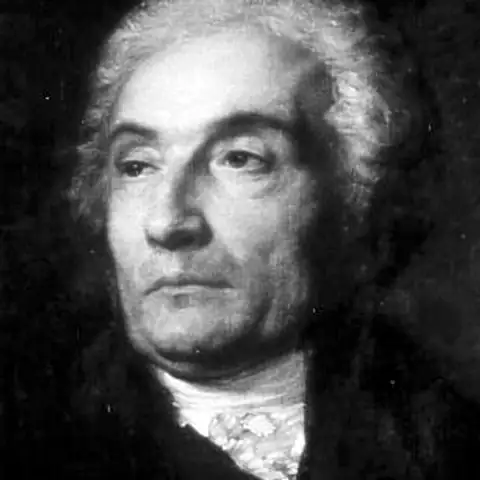
Joseph de Maistre
Historical figureFrance1753-1821

Joseph de Maistre

Savoyard magistrate and member of the Senate of Savoy · Envoy of the Kingdom of Sardinia to St. Petersburg

Savoyard diplomat and thinker who fought the ideas of the French Revolution, defending hereditary monarchy, the authority of the pope, and an order resting on faith and tradition.

Profile on 12 axes8 of 12 documented
ECONOMYSTATESOCIETYWORLDOwnershipMarketsWelfareAuthoritySecurityStructureMoralityReligionTechnologyCultureTradeForeign
Where they stood

Joseph de Maistre, axis by axis

  1. 01OwnershipNo clear record
    PublicPrivate

    He left no economic theory. His writing dealt with kingship, faith and the Revolution.

  2. 02MarketsNo clear record
    PlannedFree

    He said nothing recorded about markets, which suits the era he lived in.

  3. 03WelfareNo clear record
    SharedSelf-reliant

    Nothing is recorded on public welfare.

  4. DemocraticStrong leader
  5. LibertyOrder
  6. LocalCentral

    He defended royal sovereignty, but he also valued traditional institutions that had grown naturally over a newly designed central state. The score is therefore moderate.

  7. ProgressiveTraditional
  8. SecularReligious
  9. EmbraceCaution

    The score comes from his attack on Francis Bacon and on the Enlightenment hope that science could steer society. He wrote nothing on modern technology.

  10. MulticulturalNational identity

    The score reflects his liking for each nation's own history, customs and calling over abstract universal rules. Immigration did not feature in his writing.

  11. 11TradeNo clear record
    GlobalProtected

    Nothing is recorded on trade policy.

  12. CooperationStrength

    He saw war as having a place in God's plan. His ultramontane faith, however, set the pope over national rulers on religious questions, so a reading that puts the nation first is not simple.

4 axes have no clear record, so matching leaves them out.

Who was Joseph de Maistre?

Chambéry, where Joseph de Maistre was born, then belonged to the Duchy of Savoy within the Kingdom of Sardinia. Jesuit teachers educated him, and like his father he sat as a magistrate in the Savoy Senate. French revolutionary armies took Savoy in 1792, and he fled. He served the Sardinian king as a diplomat and spent long years in Russia as envoy at the court in St. Petersburg. He wrote Considerations on France in 1796, then On the Pope, an essay on how political constitutions come into being, and the St. Petersburg Dialogues, which came out after he died in Turin in 1821.

Political views

  • Read the Revolution and the Terror as God's punishment on France for taking up Enlightenment secularism and equality.Source: enlightenment-revolution.org
  • Described an attack on sovereignty as among the gravest of crimes and saw the killing of Louis XVI as a crime by the whole nation.Source: revolution.chnm.org
  • Said constitutions grow slowly under Providence and cannot be invented by reason, and he scorned written constitutions as mere paper.Source: en.wikipedia.org
  • Put order above every other political value and thought it rested on obedience to God and to rightful kings.Source: enlightenment-revolution.org
  • Attacked Rousseau and the Encyclopaedists for assuming that people are mainly rational and for preferring abstract ideas to the lessons of history.Source: en.wikipedia.org
  • In On the Pope he defended papal infallibility on matters of faith, likening the pope to a final court of appeal.Source: enlightenment-revolution.org
  • Treated the executioner and the death penalty as the foundation of all obedience to authority, and in letters he defended the Spanish Inquisition.Source: enlightenment-revolution.org

Legacy

Maistre helped start the Catholic counter-revolutionary tradition. His case for papal authority is often linked to the definition of papal infallibility at the First Vatican Council in 1870, and French traditionalist and reactionary writers drew on him heavily. Contemporaries who admired the Enlightenment found his views repellent, and the historian Isaiah Berlin thought he anticipated fascism in some respects. Others prize his work as a sharp critique of abstract reason and as an early look at the role of violence in society.

In their own words

“Every nation, like every individual, has a mission which it must fulfill.”
Considerations on France, 1797 edition (Jack Lively translation)

How close are you to Joseph de Maistre?

Take the 12 Axes test and see which historical figure is your political twin, axis by axis.

Take the test

Joseph de Maistre: questions

Was de Maistre a reactionary or a conservative?

Most writers call him a reactionary, a thinker who set out to answer the Revolution. He wanted the old order of monarchy and church restored, not just slowly reformed.

What did Joseph de Maistre think of the French Revolution?

He believed it was a divine punishment for a nation that had turned away from religion and tradition. To him the Terror showed what happens when people try to rebuild society using reason alone.

Why did Maistre defend the executioner?

He argued that the executioner and the death penalty held up the whole structure of authority and obedience. Many readers find this view disturbing, and it is among the most famous parts of his work.

Sources