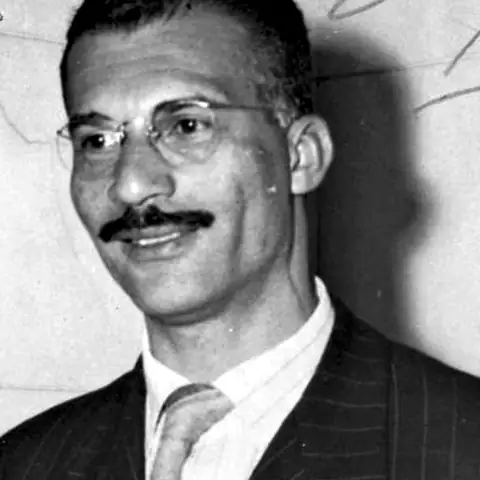
Who was Carlos Marighella?
Carlos Marighella was born in Salvador, Bahia, in 1911. He joined the Brazilian Communist Party in 1936 and stayed for 33 years as a professional militant. In 1946 he was elected a federal deputy for the party, but the government stripped communist politicians of their seats that same year. Jailed several times, he was expelled from the party in 1967 and in 1968 founded the Ação Libertadora Nacional with other dissidents. In June 1969 he wrote the Minimanual of the Urban Guerrilla. Political police killed him in São Paulo on 4 November 1969.
Political views
- He joined the Brazilian Communist Party in 1936 and remained a militant for 33 years, including a visit to China in 1953 and 1954 at the invitation of the party's central committee.Source: memoriasdaditadura.org.br
- He won a seat in the 1946 constituent Congress for the Communist Party of Bahia, but the Dutra government cancelled the mandates of communist politicians that year.Source: memoriasdaditadura.org.br
- The party expelled him in 1967 over political differences, and he founded the ALN in 1968 with other dissidents.Source: memoriasdaditadura.org.br
- In his June 1969 Minimanual he called on opponents of the military dictatorship to act, however small the task, and listed bank assaults, ambushes, kidnapping, sabotage and terrorism among the methods.Source: marxists.org
- He signed the Minimanual so as to take responsibility for ideas drawn from his group's armed experience, and he recast the words violence and terrorism as positive labels for revolutionary action.Source: marxists.org
- In September 1969 the ALN, together with the MR-8, kidnapped the US ambassador Charles Elbrick, and 15 political prisoners were freed in exchange.Source: memoriasdaditadura.org.br
Legacy
Admirers see Marighella as a persecuted opponent of a military dictatorship, jailed four times with reports of torture and finally shot down by the state. His death was an act of state violence: officials claimed a gunfight, but Brazil's National Truth Commission and the special commission on political deaths concluded he was executed after being immobilized, and the state was held responsible. Critics, including many on the Brazilian left, charge that the ALN's bank raids and kidnappings put civilians at risk and that his open embrace of terrorism gave the regime an excuse for harsher repression.