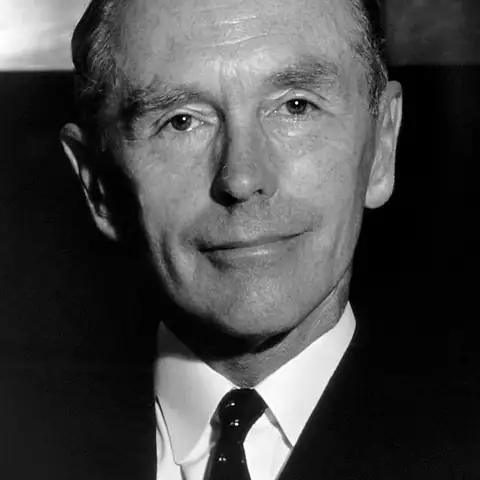
Who was Alec Douglas-Home?
Alec Douglas-Home came from a Scottish landed family and was raised among the British elite. He went to Oxford, played first-class cricket and won his first seat in the Commons in 1931. He worked closely with Neville Chamberlain in the late 1930s. Later he sat in the Lords as the Earl of Home and held the Commonwealth and Foreign Office posts. When Harold Macmillan quit in 1963, the Conservatives chose him as the new leader. He renounced his title, won a Commons seat and led the party into the 1964 election. He lost it very narrowly. He died in 1995.
Political views
- Until his death he insisted that the Munich deal of 1938 had bought Britain time to rearm.Source: en.wikipedia.org
- In the Cold War he sided with Washington over Cuba, and in 1963 he put Britain's name to the treaty banning nuclear tests in the air, in space and underwater.Source: en.wikipedia.org
- He backed a law ending resale price maintenance, so makers could no longer dictate what shops charged.Source: legislation.gov.uk
- His government was firm with the trade unions.Source: gov.uk
- His ministers allowed a sale of British buses to Cuba to go ahead, which upset the Johnson administration in the United States.Source: gov.uk
- As Foreign Secretary in 1971 he ordered 105 Soviet diplomats out of Britain for spying.Source: en.wikipedia.org
Legacy
Supporters remember a decent, steady man who calmed a shaken party and nearly won an election that looked lost. Macmillan said he was steel painted to look like wood. Critics say the way he was picked, by private soundings among senior Tories, looked like a closed club, and the backlash led the party to hold a proper vote for its leaders. They also note that he admitted he knew little about economics. His handling of white-ruled Rhodesia and of the 1968 D'Oliveira cricket row with South Africa is still criticised. His time as Prime Minister was among the shortest of the century.