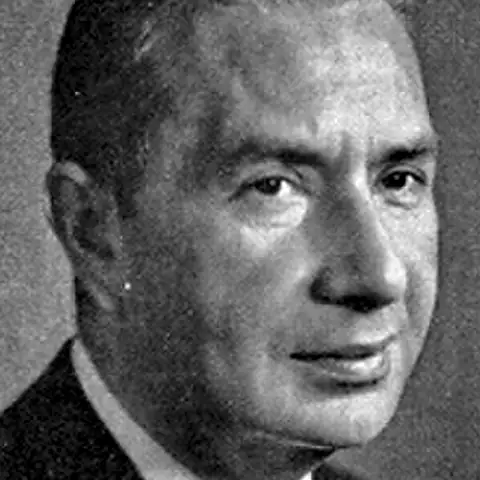
Who was Aldo Moro?
Aldo Moro was born in Maglie in 1916 and was active in Catholic student groups. Elected to the Constituent Assembly in 1945, he was the youngest member of the committee that drafted the Italian constitution. He served as justice minister in 1954 and became Christian Democratic secretary in 1959. He headed governments from December 1963, and was foreign minister from August 1969 to November 1974. The Red Brigades kidnapped him on 16 March 1978, and his body was found on 9 May 1978.
Political views
- He opposed Communism but wanted to move the Christian Democrats away from reliance on right-wing groups with pro-Fascist sympathies.Source: encyclopedia.com
- As party secretary from 1959 he championed a centre-left coalition with the Socialists, which the party's 1962 congress endorsed.Source: treccani.it
- As justice minister in 1954 he overhauled the prisons.Source: encyclopedia.com
- From 1968 he urged a strategy of attention toward the Communists; in 1976 he favored their support from outside the cabinet.Source: treccani.it
- He rejected Berlinguer's historic compromise as a lasting strategic alliance, though he supported including the Communists in the parliamentary majority to manage the emergency.Source: treccani.it
- He argued that the Christian Democrats should have autonomy from the Holy See and the bishops, against opposition from figures such as Cardinal Siri.Source: treccani.it
- He kept Italy in NATO while seeking more room for independent action, and supported Willy Brandt's Eastern policy.Source: treccani.it
Legacy
Admirers credit Moro with drawing the Socialists and then the Communists into democratic institutions, defending the Constitution and keeping the party in the Atlantic alliance. Critics found him evasive: he was known for ambiguous formulas such as parallel convergences. On 16 March 1978 the Red Brigades killed his five escorts and abducted him. They demanded the release of 13 prisoners; the government and most parties, led by the Communists, held a firmness line and refused to negotiate, while Bettino Craxi's Socialists explored a channel and Pope Paul VI appealed for his release. His body was found on 9 May, and one historian argues the murder began the First Republic's crisis.