12axes-testTake the test
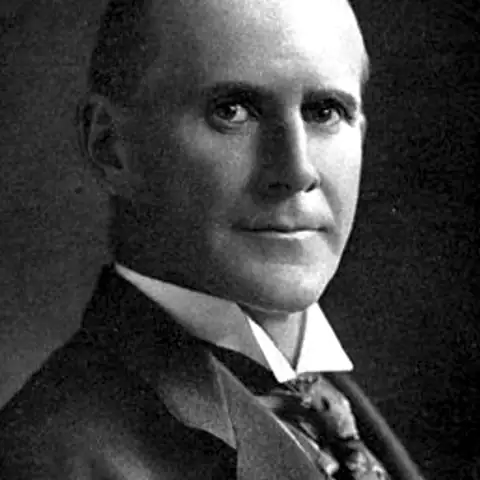
Eugene V. Debs
Historical figureUnited States1855-1926

Eugene V. Debs

Founder of the American Railway Union · Co-founder of the Socialist Party of America

Debs began as a railroad union leader and became America's best-known socialist. He ran for president five times and went to prison for speaking against World War I.

Profile on 12 axes10 of 12 documented
ECONOMYSTATESOCIETYWORLDOwnershipMarketsWelfareAuthoritySecurityStructureMoralityReligionTechnologyCultureTradeForeign
Where they stood

Eugene V. Debs, axis by axis

  1. PublicPrivate
  2. PlannedFree
  3. SharedSelf-reliant
  4. DemocraticStrong leader

    He wanted to gain power through ballots and unions, not through armed uprising.

  5. LibertyOrder
  6. LocalCentral

    He called for social ownership of industry across the nation but said little about how power should be split between Washington and the states. The score leans slightly central.

  7. ProgressiveTraditional

    He wrote in favor of equal rights for women and the vote for them, which was ahead of many people in his day.

  8. SecularReligious

    He often spoke in Christian moral terms, yet he mostly criticized organized churches.

  9. 09TechnologyNo clear record
    EmbraceCaution

    No view on technology policy in the modern sense is documented, so this axis is left empty.

  10. MulticulturalNational identity
  11. 11TradeNo clear record
    GlobalProtected

    Tariffs were not a central part of his platform and no clear position is documented, so this axis is left empty.

  12. CooperationStrength

2 axes have no clear record, so matching leaves them out.

Who was Eugene V. Debs?

Eugene V. Debs was born in 1855 in Terre Haute, Indiana, and started out working on the railroads. In 1893 he formed the American Railway Union, which signed up workers from every trade in the industry. He led the 1894 Pullman boycott and spent six months in jail for defying a court order. In prison he turned to socialism. He helped launch the Socialist Party of America in 1901 and was its candidate for president in 1900, 1904, 1908, 1912 and 1920. His best result came in 1912, when he took about 6 percent of the vote. A speech against the war in 1918 led to a conviction under the Sedition Act.

Political views

  • He wanted the main industries owned and run by the working people for everyone's benefit, not by private owners competing for profit.Source: marxists.org
  • He pushed industrial unions that brought every worker in an industry into one body, not separate craft unions. He also helped found the Industrial Workers of the World in 1905.Source: en.wikipedia.org
  • In his 1918 speech in Canton, Ohio, he said that the ruling class starts wars and working people fight and die in them.Source: marxists.org
  • He spoke out against racism, including inside the socialist movement, and saw the fight of Black workers as part of the wider class struggle.Source: marxists.org
  • In 1910 he opposed a Socialist Party move to keep some immigrants out. He called it unsocialist and said the oppressed had a right to come.Source: marxists.org
  • He ran for president in 1920 from a federal prison cell and still won over 900,000 votes.Source: en.wikipedia.org

Legacy

Debs is still a hero to many socialists, union members and free speech campaigners. They admire his work for industrial workers, his stand against war and his readiness to go to jail for his beliefs. The Supreme Court upheld his conviction, and the case is still cited in arguments over speech in wartime. President Harding cut his sentence short in 1921. Critics in his own day, including business leaders and political rivals, saw his attacks on the draft as illegal interference with the war effort and his plan for public ownership as a danger to property and growth. He never won more than about 6 percent of the national vote.

In their own words

“While there is a lower class, I am in it, and while there is a criminal element I am of it, and while there is a soul in prison, I am not free.”
Statement to the Court upon being convicted of violating the Sedition Act, 1918

How close are you to Eugene V. Debs?

Take the 12 Axes test and see which historical figure is your political twin, axis by axis.

Take the test

Eugene V. Debs: questions

Was Eugene Debs a socialist?

Yes. Debs was the most famous American socialist of his time. He co-founded the Socialist Party of America in 1901 and ran for president on its ticket five times.

Why did Eugene Debs go to prison?

He was jailed twice. In 1895 he served six months for defying a court order during the Pullman strike. In 1918 he was convicted under the Sedition Act over an antiwar speech in Canton, Ohio, and sentenced to ten years. President Harding freed him in 1921.

What did Eugene Debs want?

Debs wanted the big industries to be owned by the public and run for the good of workers. He also backed strong industrial unions, equal rights for women and open immigration, and he opposed war.

Sources