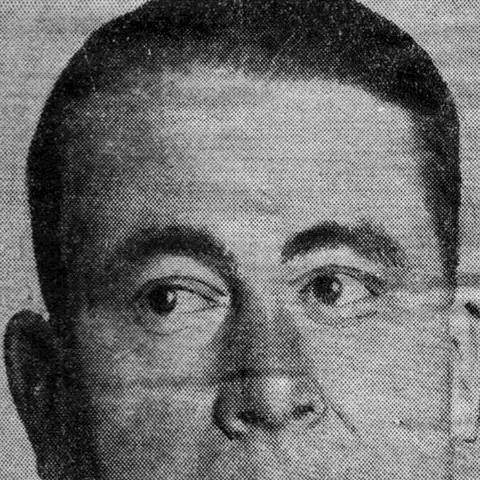
Who was Carl Schmitt?
Schmitt grew up in a Catholic family in Plettenberg, a Westphalian town, where he was born in 1888. In the Weimar years he published Political Theology, The Concept of the Political and Constitutional Theory. He also argued that the president should hold wide emergency powers. He signed up with the Nazi Party on 1 May 1933. Hermann Goring placed him on the Prussian State Council, and he held posts in Nazi legal bodies. The SS turned on him in 1936 and stripped him of party roles, though his Berlin chair stayed. US forces interned him after 1945. He faced no trial, refused denazification and lived in Plettenberg until 1985.
Political views
- Taught that a legal order rests on a decision, and that the sovereign is the one who can declare the state of exception.Source: plato.stanford.edu
- Defined the political as the line between friend and enemy. It is a public, group-level line, and it can in the end involve killing.Source: plato.stanford.edu
- Thought liberal politics and parliamentary argument avoid hard choices, which in his view weakens the political community.Source: plato.stanford.edu
- Wanted large emergency powers for the Weimar president, and opposed handing guardianship of the constitution to a court.Source: plato.stanford.edu
- Defended the 1934 murders known as the Night of the Long Knives in an article titled The Fuhrer Protects the Law.Source: en.wikipedia.org
- At a 1936 conference he organised, he called for German law to be cleansed of 'Jewish spirit' and for Jewish authors to be flagged.Source: en.wikipedia.org
- His book The Nomos of the Earth claimed that order depends on dividing up land, and that universal ideologies turn wars into total ones.Source: plato.stanford.edu
Legacy
Few legal theorists of the last century were as influential or as disputed. His ideas on sovereignty, emergencies and the friend and enemy divide are read by conservatives and by leftist critics of liberalism, and they mattered in West German conservative circles after 1945. He is also known as the Crown Jurist of the Third Reich. Schmitt entered the Nazi Party in 1933, cheered the burning of Jewish authors' books, defended the 1934 killings and published antisemitic work through 1936. The SS later called him a careerist who faked his antisemitism. Critics hold that his theory of the exception helped wreck Weimar democracy. A few defenders say it explains real emergencies.
In their own words
“The sovereign is he who decides on the exception.”