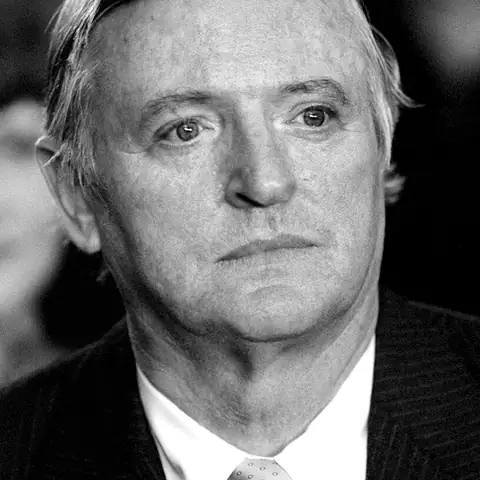
Who was William F. Buckley Jr.?
William F. Buckley Jr. was a New York writer who made his name in 1951 with God and Man at Yale, a book charging that his old university had drifted from its founding purpose. In 1955 he started National Review and edited it until 1990. He also fronted the television debate show Firing Line, which ran from 1966 to 1999. He stood for mayor of New York in 1965 on the Conservative Party ticket and won 13.4 percent of the vote. He never held elected office, yet he did more than most to organize the conservative movement after the Second World War. He died in 2008.
Political views
- Started National Review in 1955 to challenge what he saw as a liberal consensus among intellectuals, and named the New York Times among its targets.Source: nrinstitute.org
- Used the magazine to promote fusionism, a pact between social traditionalists and free-market libertarians.Source: en.wikipedia.org
- In 1962 he said the John Birch Society was 'far removed from common sense' and urged Republicans to turn away from its leader.Source: en.wikipedia.org
- Backed the death penalty, and in 1978 quit Amnesty International USA because it opposed capital punishment.Source: en.wikipedia.org
- Spoke up for legalizing marijuana from his 1965 mayoral race on, and later pressed conservatives to support drug-law reform.Source: en.wikipedia.org
- In a 1957 editorial he defended segregation in the South as a temporary arrangement. He later said the magazine should have backed civil rights laws.Source: en.wikipedia.org
- By 2006 he had decided that the American mission in Iraq had failed.Source: en.wikipedia.org
Legacy
Admirers in the conservative movement say Buckley gave American conservatism intellectual weight, kept it apart from fringe groups and helped build the coalition behind Barry Goldwater and Ronald Reagan. In 1991 he received the Presidential Medal of Freedom. Critics on the liberal left point to his early resistance to civil rights laws, to a 1986 column that proposed tattooing people with AIDS, an idea he later backed away from, and to what they read as an elitist tone. Some conservatives disliked his support for drug reform and his late doubts about the Iraq war. Many hold up Firing Line as a model of polite but sharp debate.
In their own words
“It stands athwart history, yelling Stop, at a time when no one is inclined to do so, or to have much patience with those who so urge it.”