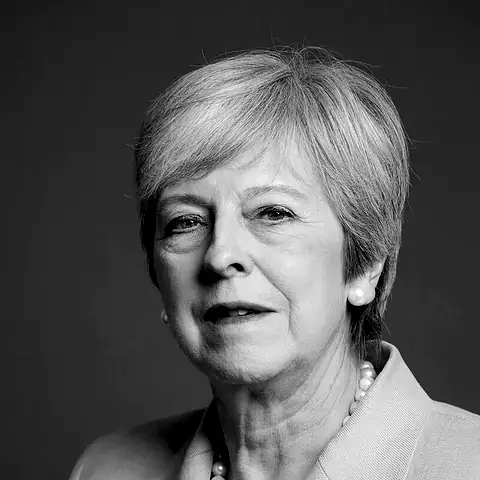
Who is Theresa May?
Eastbourne was Theresa May's birthplace in 1956, and she read geography at Oxford. She started out at the Bank of England and in payments, and served as a Merton councillor. Voters in Maidenhead sent her to Parliament in 1997. She was the first woman to chair her party, and from 2010 to 2016 she was Home Secretary. Following the Brexit vote she moved into Downing Street and invoked Article 50 in March 2017. The June 2017 election cost her a majority, and MPs voted down her exit deal more than once. She stepped down in 2019, left the Commons in 2024, and now sits in the Lords as Baroness May of Maidenhead. She has no government job.
Political views
- Her 2017 plan for Brexit meant leaving the single market, and she said that walking away without an agreement beat accepting a poor one.Source: gov.uk
- Entering office in 2016, she pledged to tackle 'burning injustices'. One example she gave was that people born poor die earlier.Source: gov.uk
- Speaking to the Telegraph in 2012, she described her aim as a 'really hostile environment' for those in Britain illegally.Source: en.wikipedia.org
- At the Home Office she brought in the Modern Slavery Act 2015.Source: legislation.gov.uk
- Following the 2018 Salisbury poisoning she led a joint push to expel Russian intelligence officers, and she gave the go-ahead for strikes on Syria after the Douma chemical attack.Source: gov.uk
- In 2019 she set the UK a legal aim of net zero carbon emissions by 2050.Source: gov.uk
Legacy
Her defenders see a conscientious, resilient leader who tried to carry out the Brexit vote while shielding the Union and the economy. They add the Race Disparity Audit and the net zero goal to her list. From the Brexit side came the charge that her deal kept Britain tied to Brussels. Remain voices attacked her red lines and her decision to start the Article 50 clock without a settled plan. Her years at the Home Office remain argued over. The hostile environment was later connected to Windrush. Caribbean-born people who had lived in Britain for decades were wrongly threatened with removal, and at least 83 were deported. Critics also condemn how her government dealt with the aftermath of the Grenfell Tower fire.
In their own words
“That means fighting against the burning injustice that, if you’re born poor, you will die on average 9 years earlier than others.”
“I am equally clear that no deal for Britain is better than a bad deal for Britain.”